Growing FarmIQ's Design Team, Practice & Systems

FarmIQ, Lead Product Designer
Oct 2022 – Jan 2025
In-product feedback
75–80%
Response rate on surveys reaching farm workers we'd typically struggled to hear from before in our regular research.
Mobile recording CSAT
80%
Average CSAT for new mobile recording flows farmers use most.
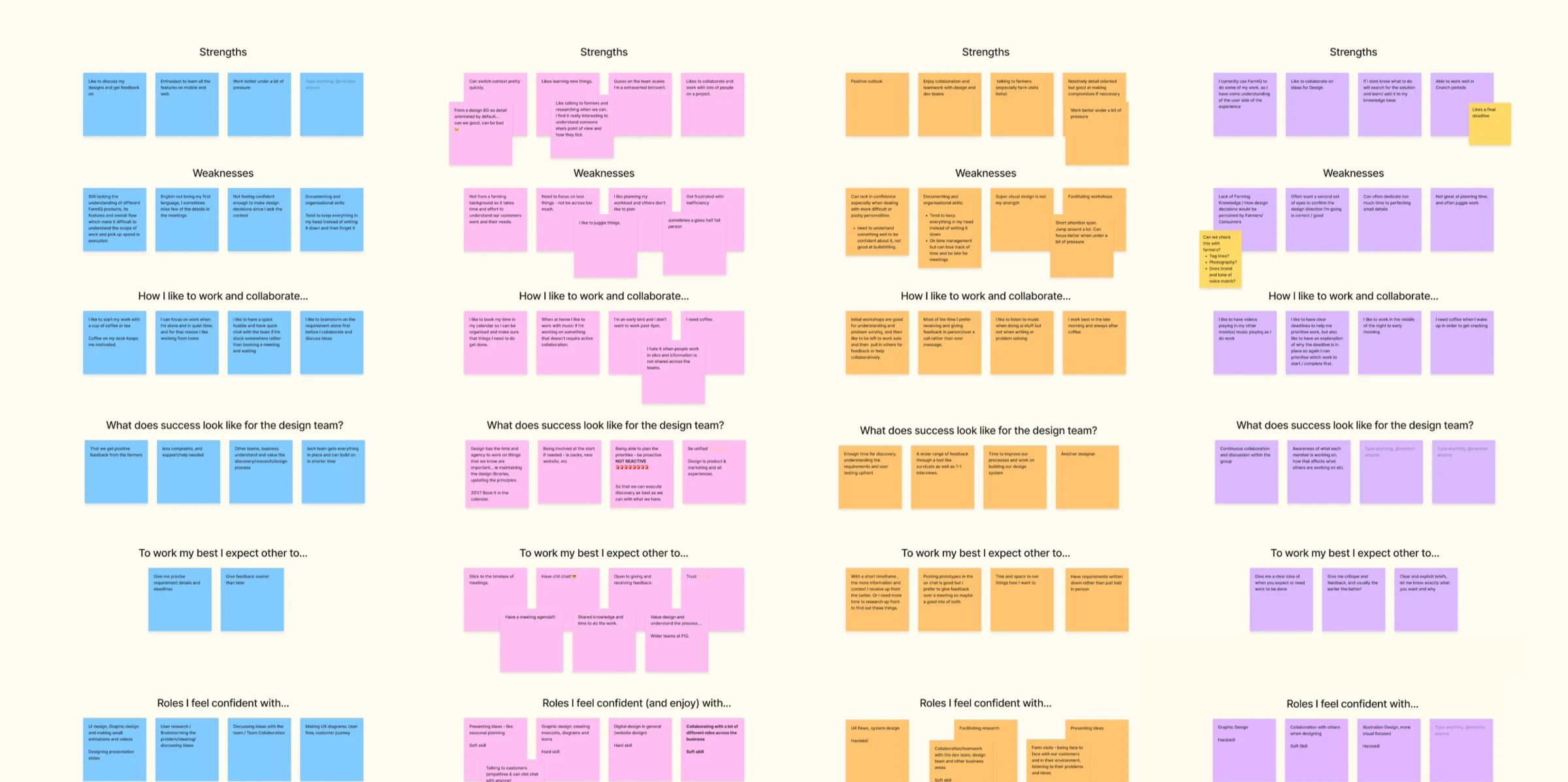
I led FarmIQ's shift from ad-hoc design and fragmented UI to a repeatable operating model and multi-platform design system, grounded in real farmer roles and jobs-to-be-done. It started with the team itself. In a charter session, we mapped our strengths, working styles, and how we'd collaborate.
What started as inconsistent products and a newly re-formed team became a governed system that let us move fast without sacrificing quality. The same foundations that went on to power two of FIQ's most-used features that I crafted, Diary and Tasks.
“
Sarah uplifted how we did research at FarmIQ, and she made sure I was part of shaping it, not just delivering it. Working closely with her on our principles, I grew more confident making my own calls. The work we did together raised the bar for design output across the product.
Holly Feary, Senior Product Designer, FarmIQ
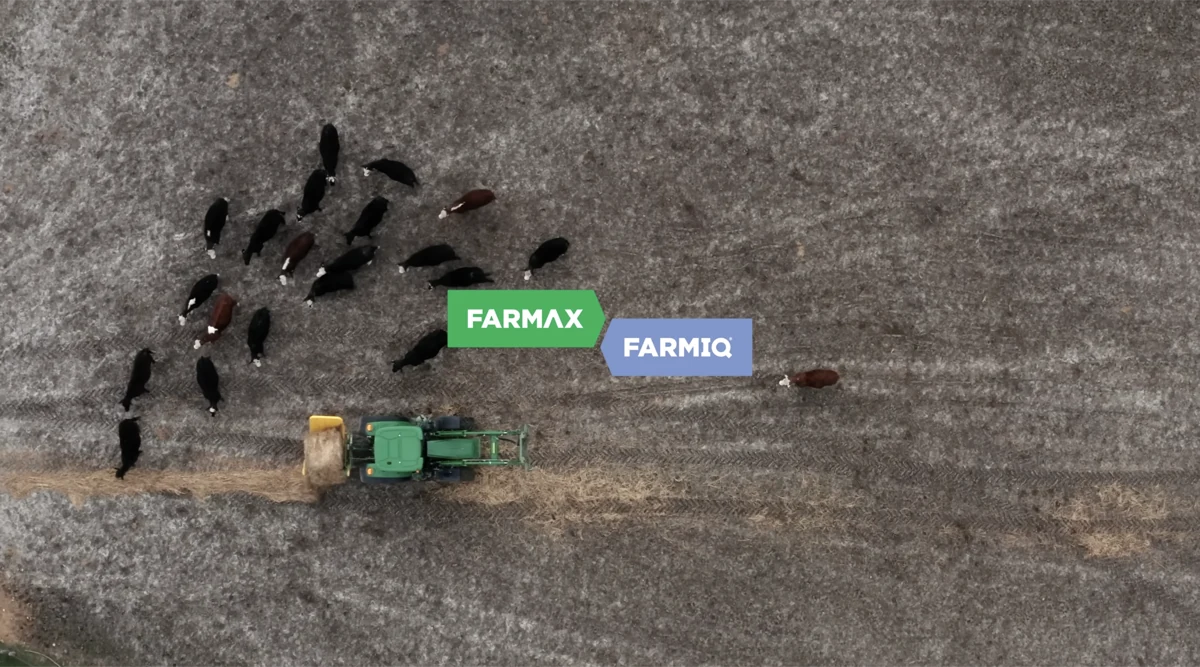
Uplifting brand consistency across the products.
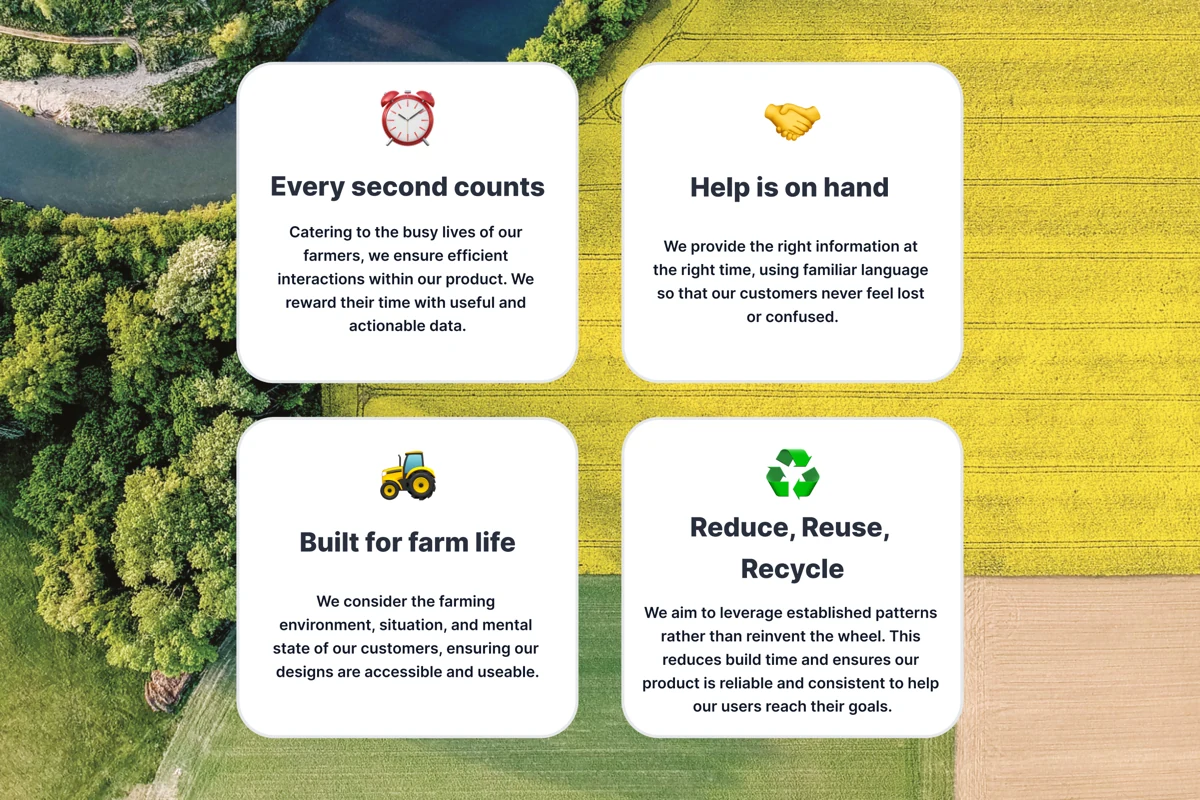
Design Principles Holly created with coaching.
My Role
As Lead Product Designer at FarmIQ, I led a team of 2 Product Designers and a Graphic Designer, building the operating model and design system that took FarmIQ from fragmented, inconsistent UI to a governed, multi-platform practice. Partnered with Product Managers, Engineering Leads, Customer Success, and farming SMEs throughout.
The Situation I Walked Into
FarmIQ had grown organically. Across web and mobile, the products felt inconsistent, across products designers solved the same problems twice, engineers rebuilt near-identical patterns with similar behaviours, and delivery slowed.
After a significant restructure, we had a newly re-formed team with different backgrounds and working styles, but no shared operating model, mission, rituals, measures, to keep quality high while moving quickly.
Our customer understanding needed to mature. The existing personas were too narrow and didn't reflect roles, context, or device use, so discovery inputs lacked the clarity needed for confident prioritisation.
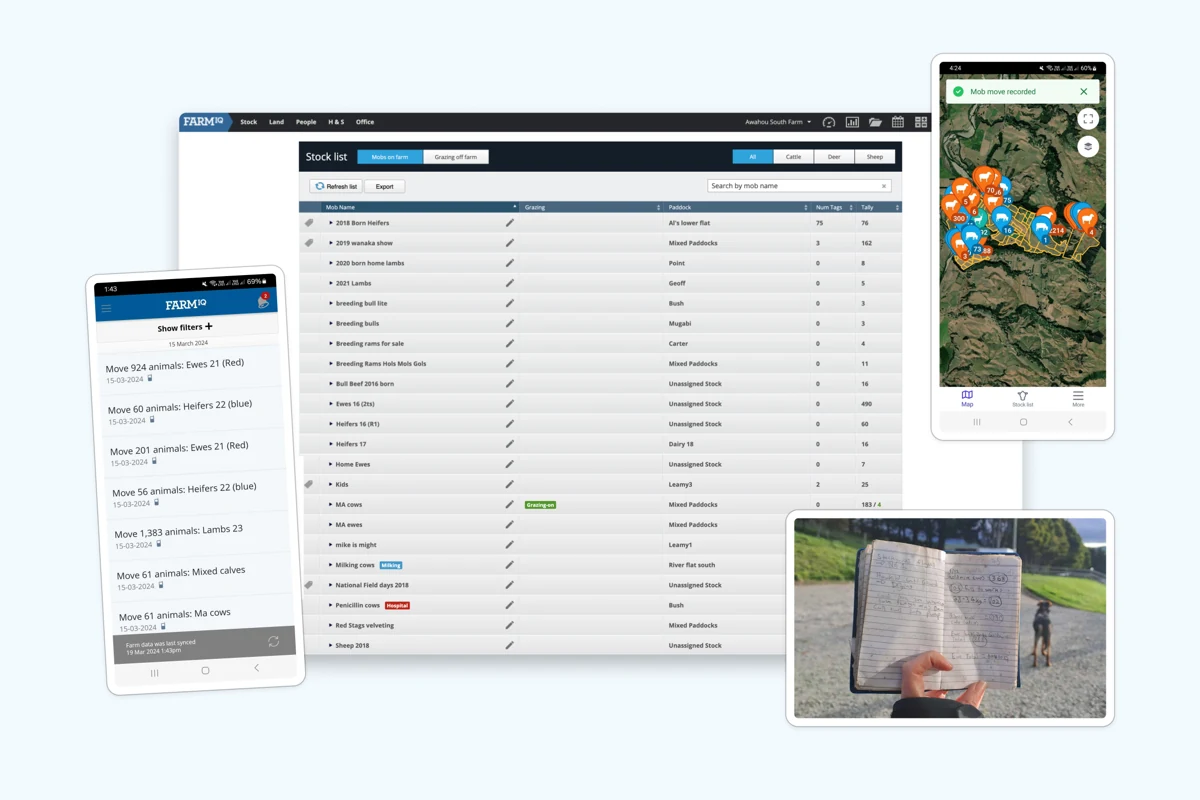
Products before aligned design system.
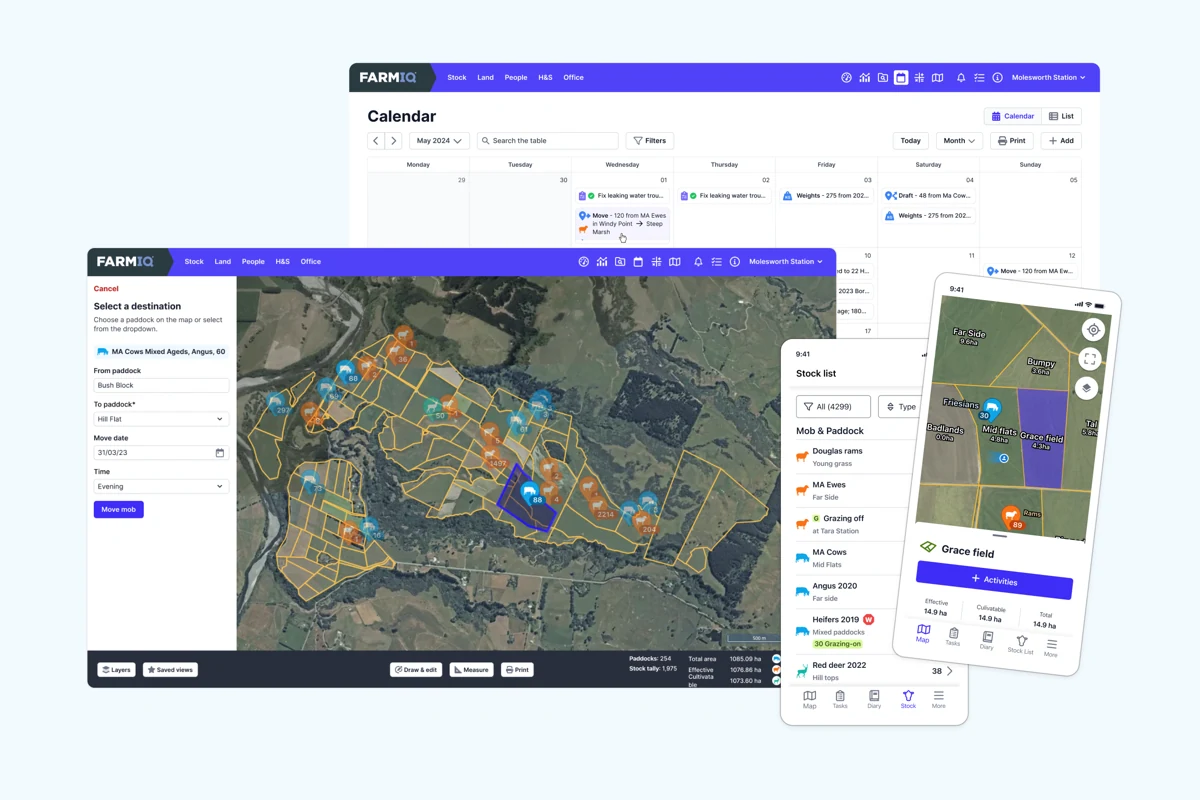
Products after design system, roles & JTBD.
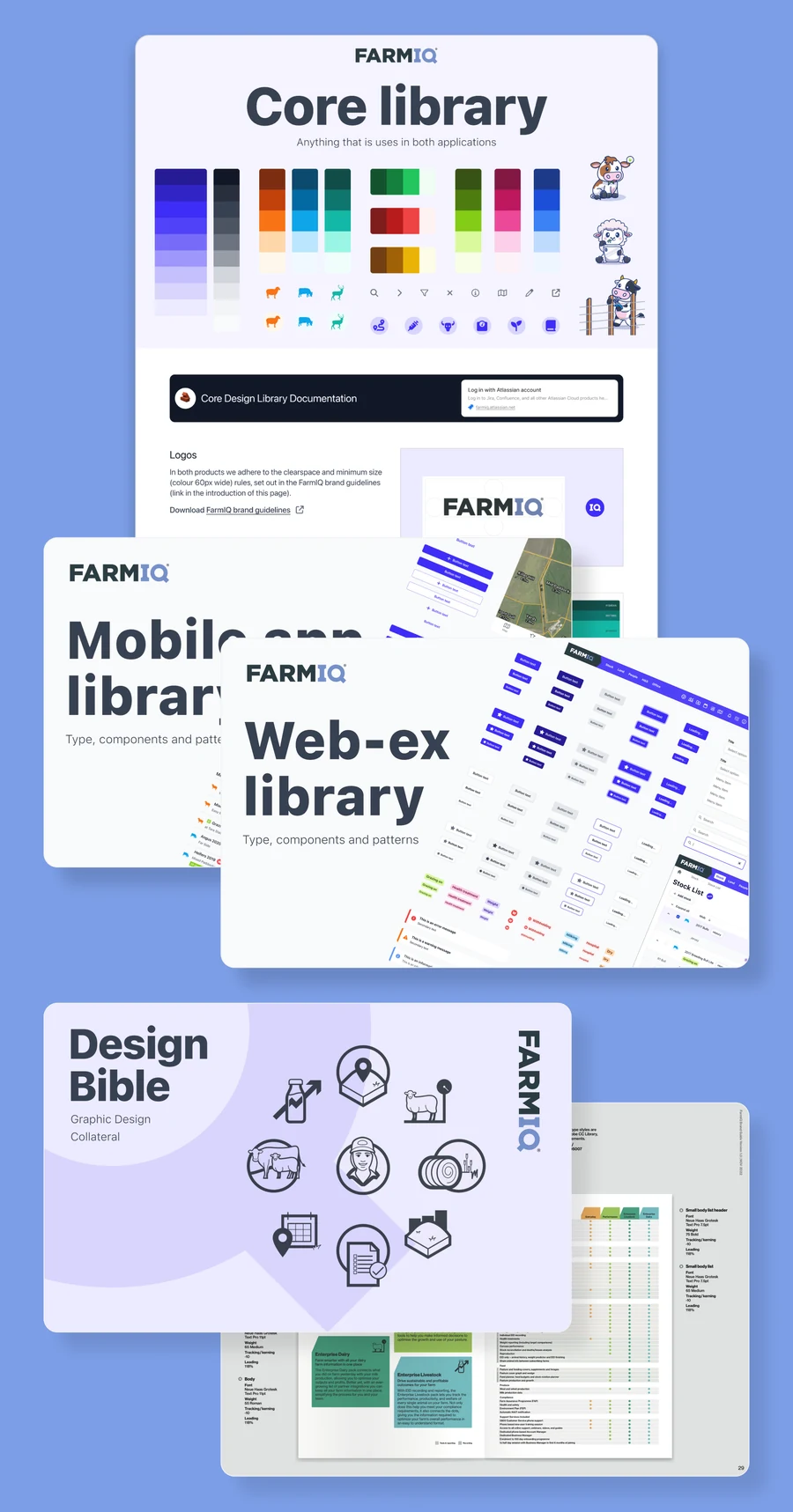
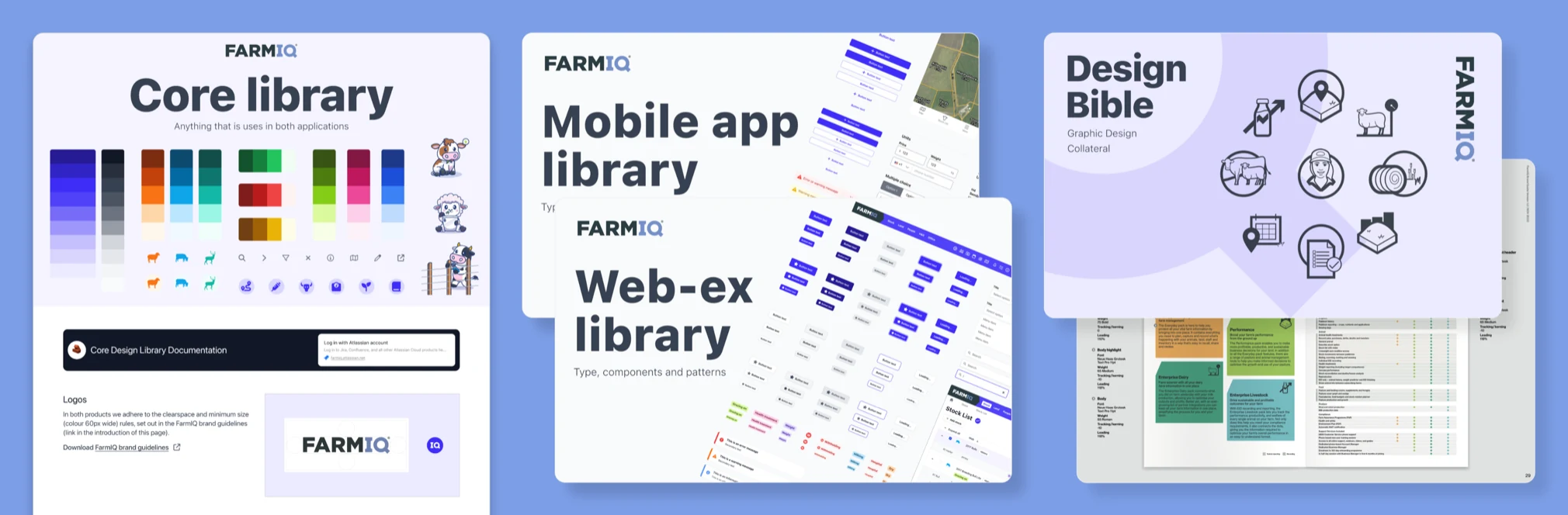
The full library set: Core, Mobile, Web-ex, Brand.
The Calls I Made
1
Gave the team a clear north star
We co-created a Design Team Charter defining mission, roles, values, collaboration agreements, and measures. I translated the company's strategy into a concise design narrative and four guiding principles that resolved debates without looping around the same discussions.
2
Modernised customer understanding
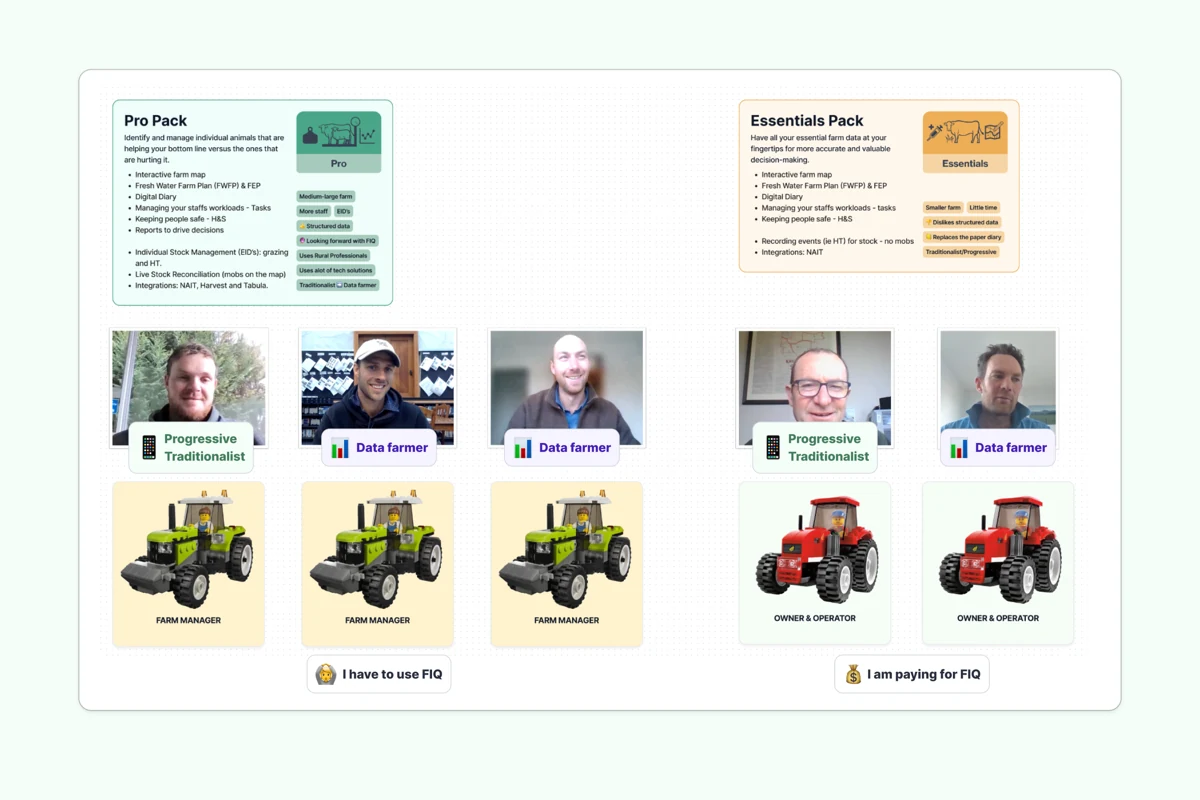
I led a refresh of our customer understanding through research. Every interview began with consistent "farmer introduction" questions, and each session produced a farmer-on-a-page summary. With SMEs, we co-created role definitions across farm owners, farm managers, stock managers, workers, and third-party users, and paired them with Jobs-to-Be-Done to focus on outcomes that matter. We then validated them with customers and kept them upto date every season.
3
Closed the loop with in-product feedback
To learn quickly from all roles, including hard-to-reach workers, I introduced in-product surveys across web and mobile. Insights fed straight back into iteration and prioritisation, alongside quantitative analytics, helping us measure the success of released solutions.
4
Scaled consistency with a multi-platform Design System
I led the evolution from fragmented design libraries to a governed Design System co-owned with engineering. We audited components and behaviours, defined system architecture, foundations through to components and patterns, and introduced a contribution model: propose, review, approve, document.
5
Cadences that let the team own problems end-to-end
I introduced weekly Design Jams and structured design reviews, working alongside our PM, Head of Product, and agile coach, so designers had a fast, reliable rhythm to move through without waiting on me to unblock every decision.
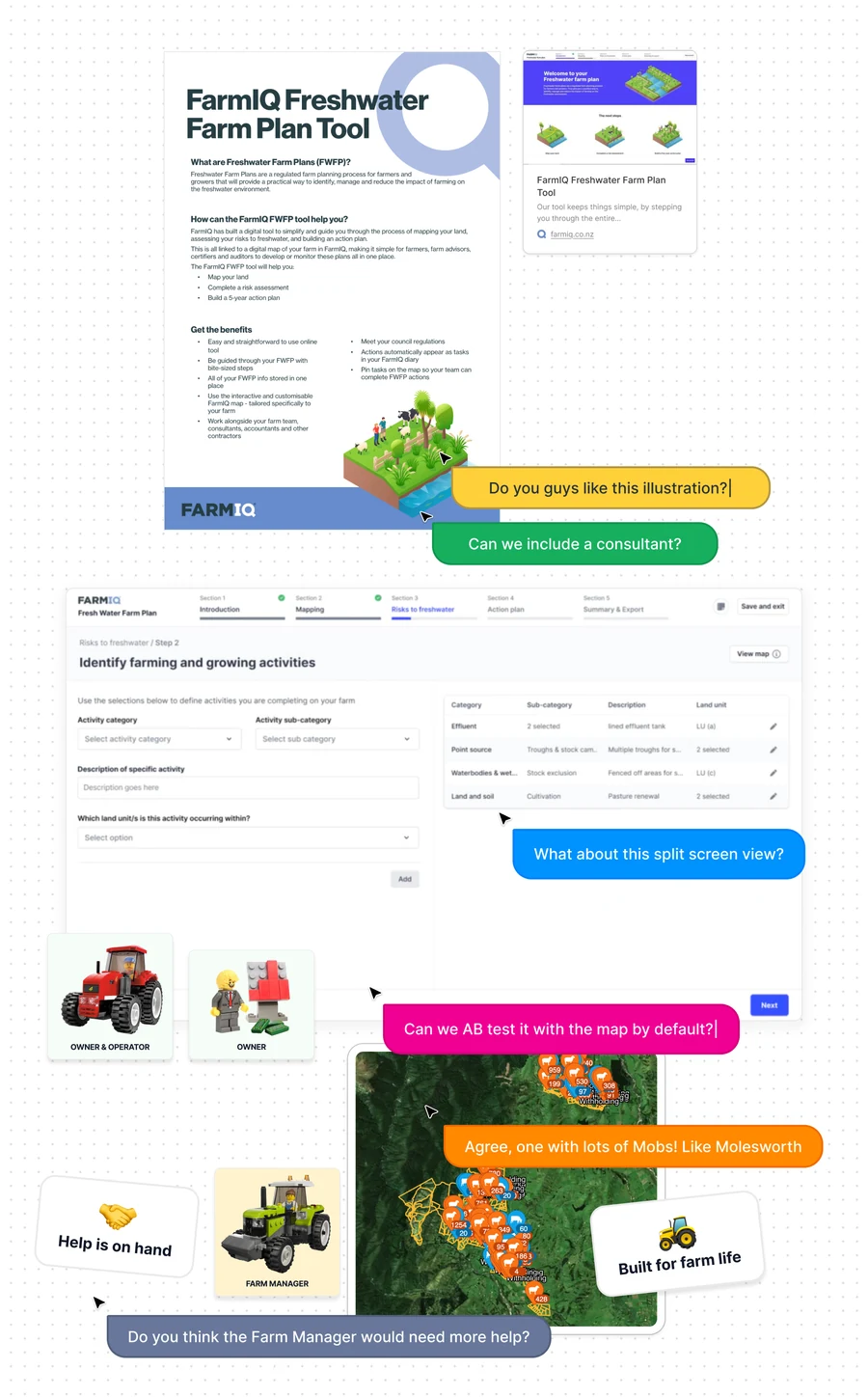
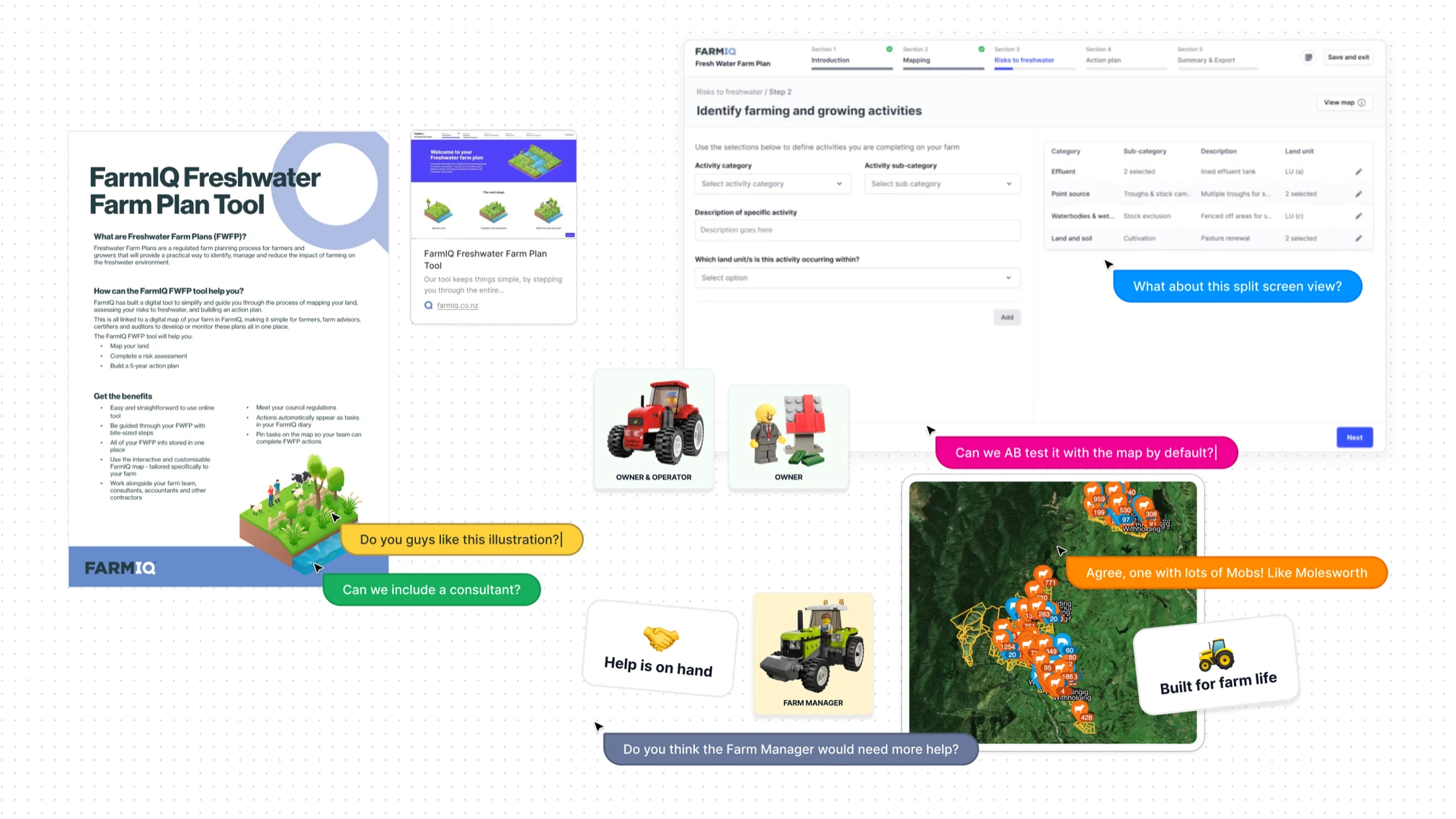
Cross-team DesignJams: faster, more collaborative, and genuinely fun.
The Solution
The design system isn't a component library sitting untouched in Figma. It runs on a contribution model, propose, review, approve, document, so any designer or engineer can suggest a new pattern, and it gets debated and documented rather than quietly duplicated.
Customer understanding become shared in a similar way. Our Farmer Building Blocks consist of the individuals: technology adoption, FIQ pack, Role and Jobs-to-Be-Done. I created the research system that enabled Designers and Product Managers to keep our roles on a page upto date every time we spoke to customers. As behaviours and attitudes shifted overtime, we kept our understanding their sentiment. Our Farmer Building Blocks are the reference point for Product and Design Discovery, opening them up before starting a new feature or flow, and during build. I also enabled a post go-live feedback loop: in-product pulses turn a shipped release into measures of success or evidence for what to enhance or build next.
The result: a designer proposing a new pattern, a PM prioritising a feature, and an engineer building a component are all working from the same source of truth, not three separate interpretations of "what good looks like."
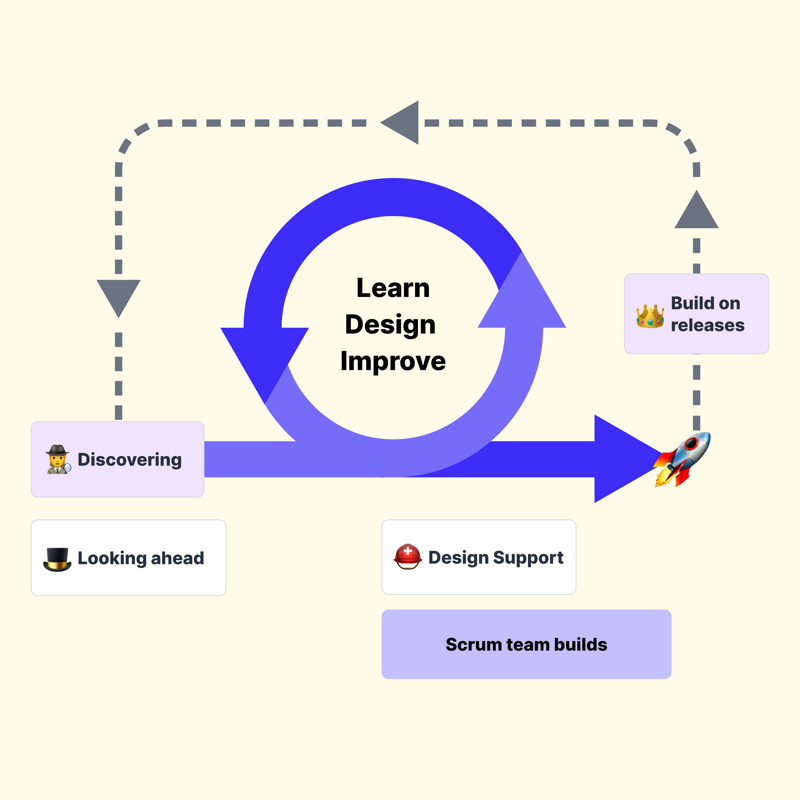
The product processes I uplifted.
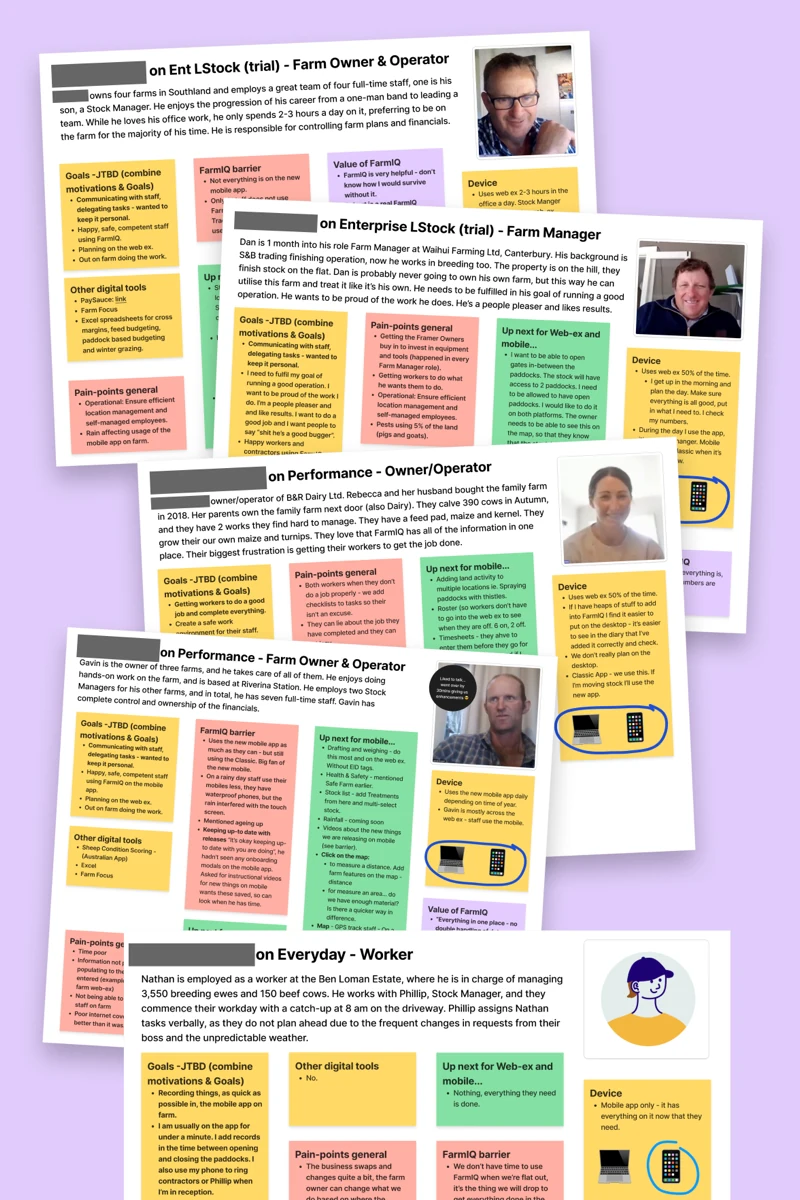
Every customer in discovery shaped our roles.
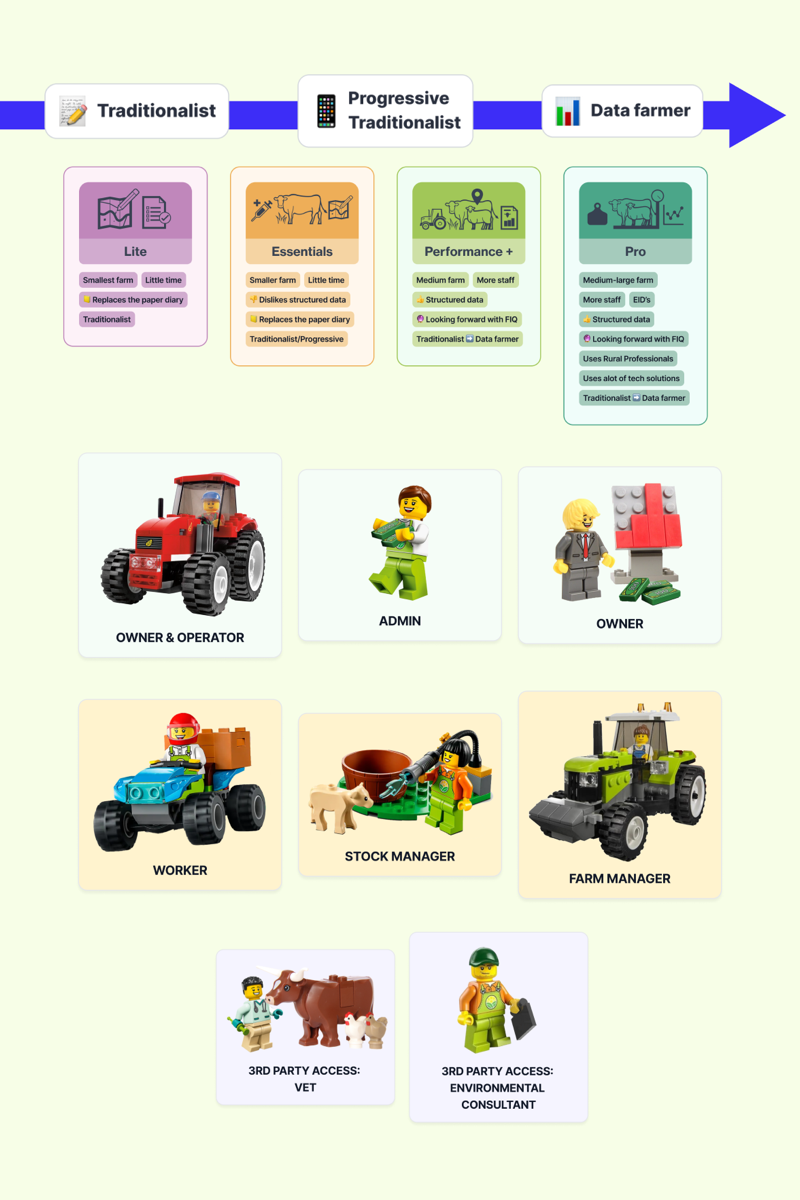
Farmer Building Blocks: adoption, packs, roles & JTBD.
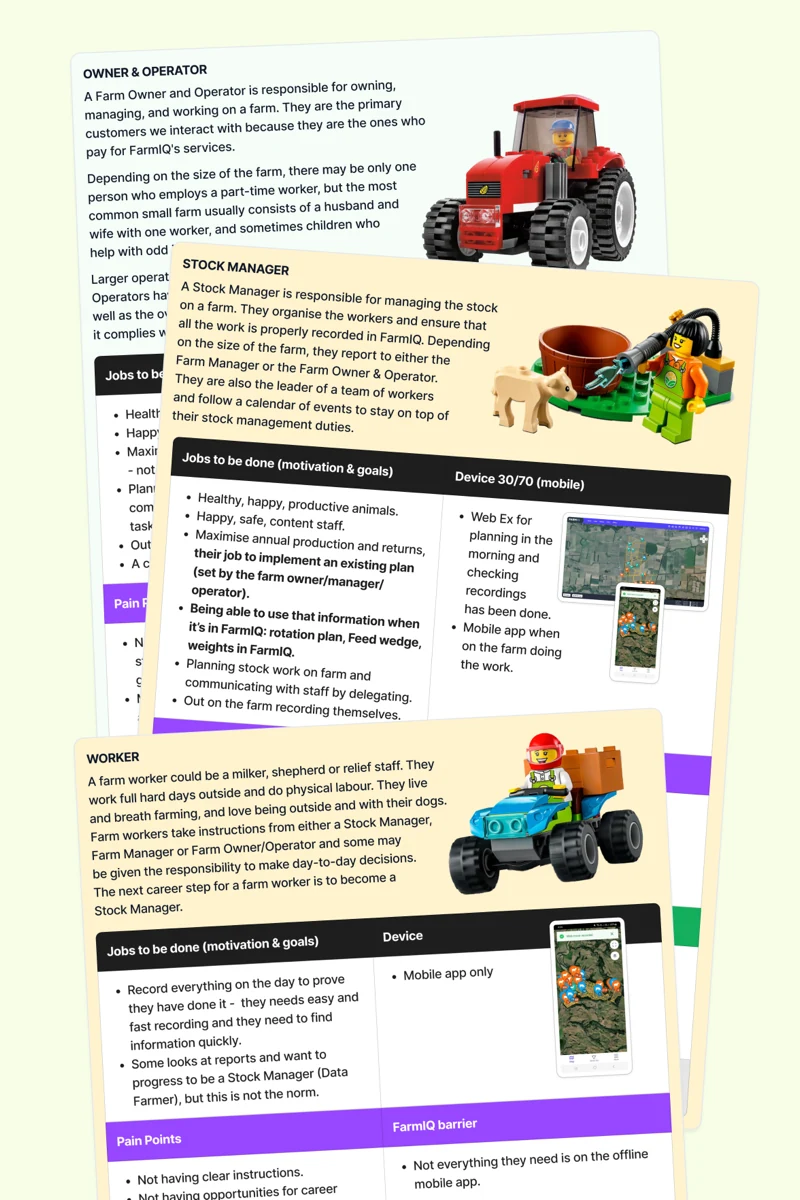
Roles-on-a-page helped Product understand customers.
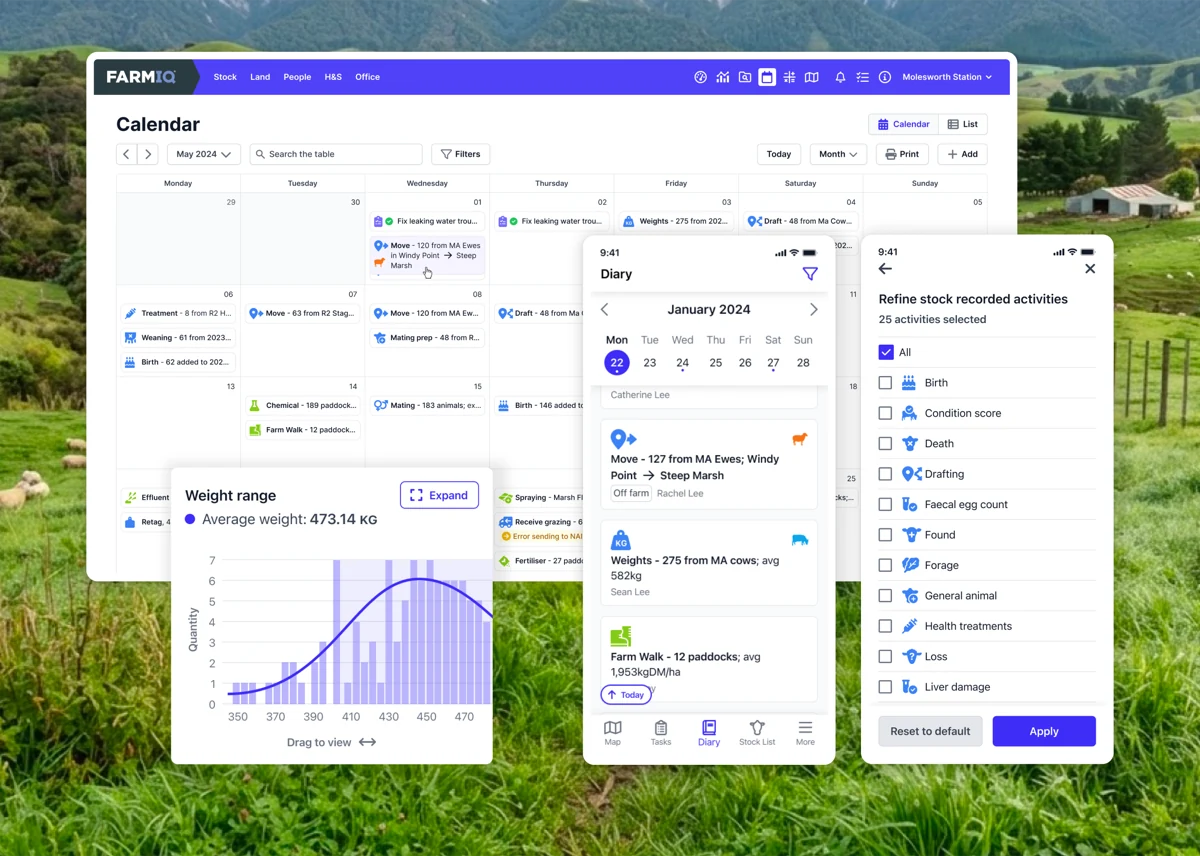
Diary: farm-wide view for in-field decisions.
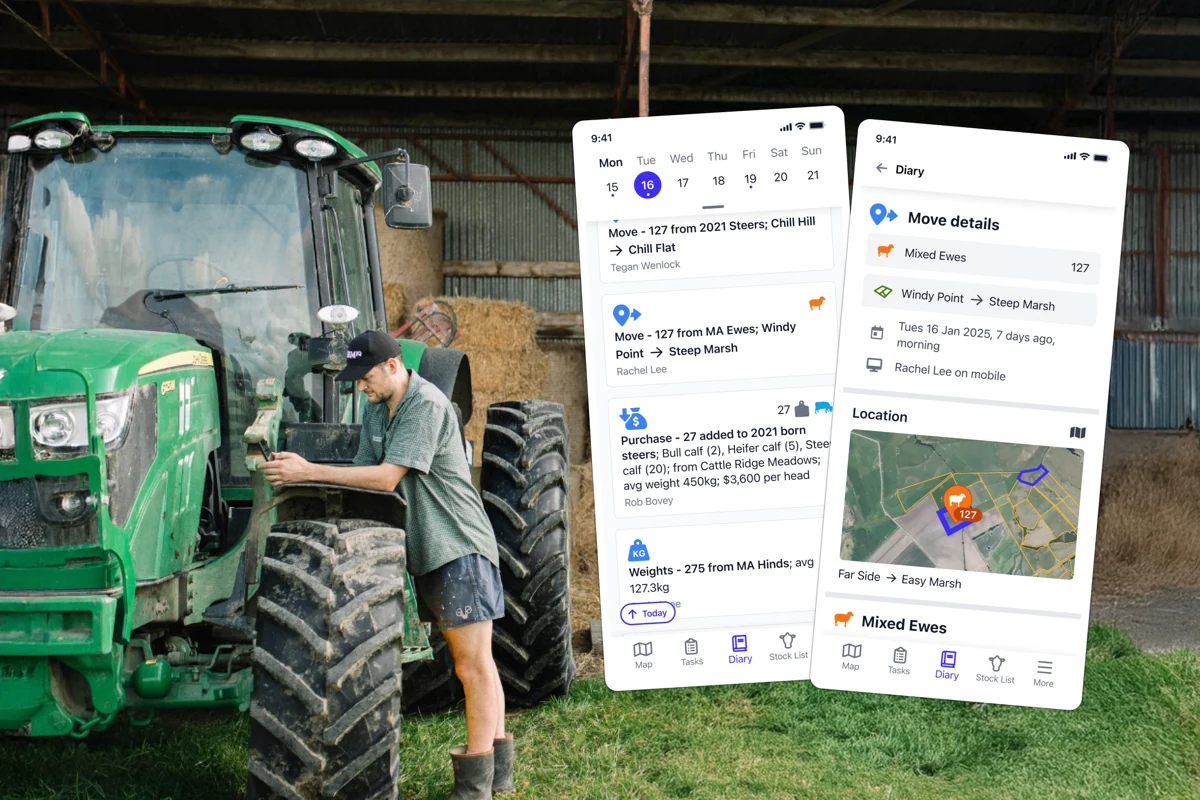
Diary on the mobile app: 80% CSAT on launch.
The Shift
Before, design and engineering worked from fragmented libraries with no shared principles, and problem-solving was reactive rather than systematic. After, a governed design system and shared rhythm mean the whole team works from one source of truth. PMs and engineering leads reported fewer surprises and clearer trade-offs, designers reported greater autonomy. The same foundations went on to underpin Diary and Tasks, two of FarmIQ's most-used features that I crafted.
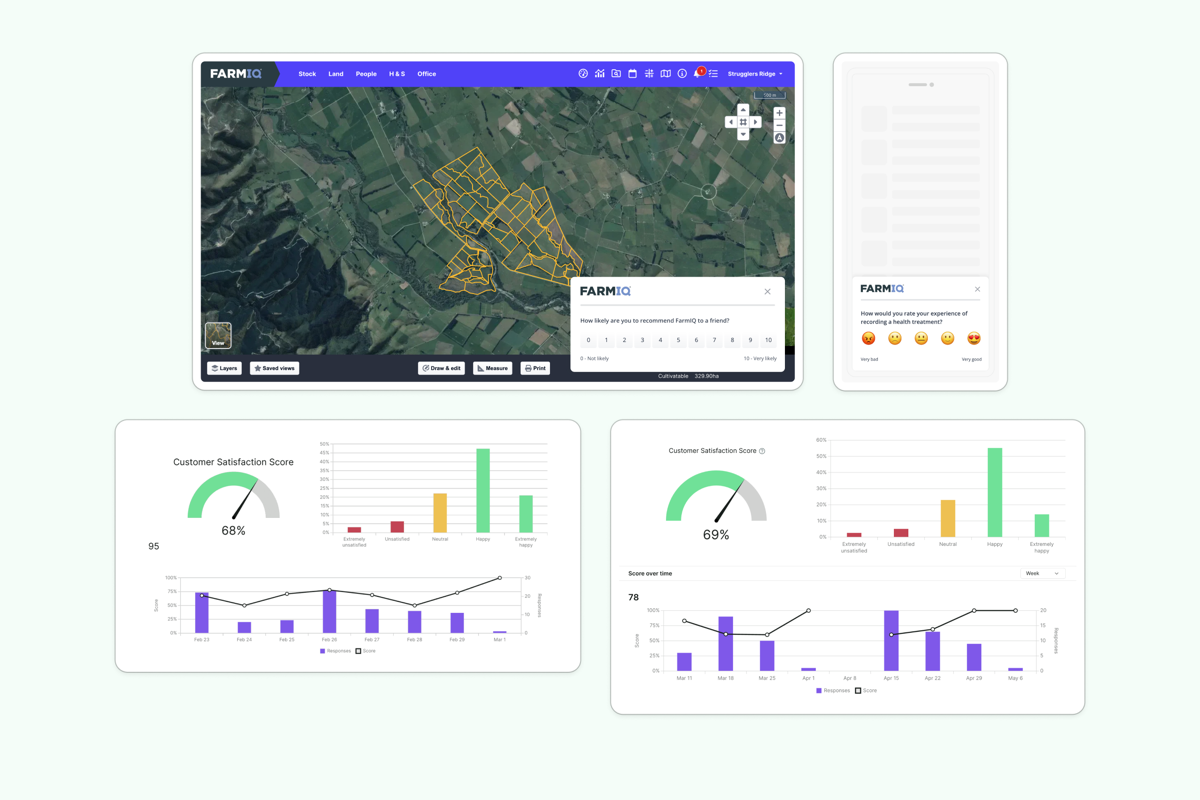
In-product feedback let us move with confidence.
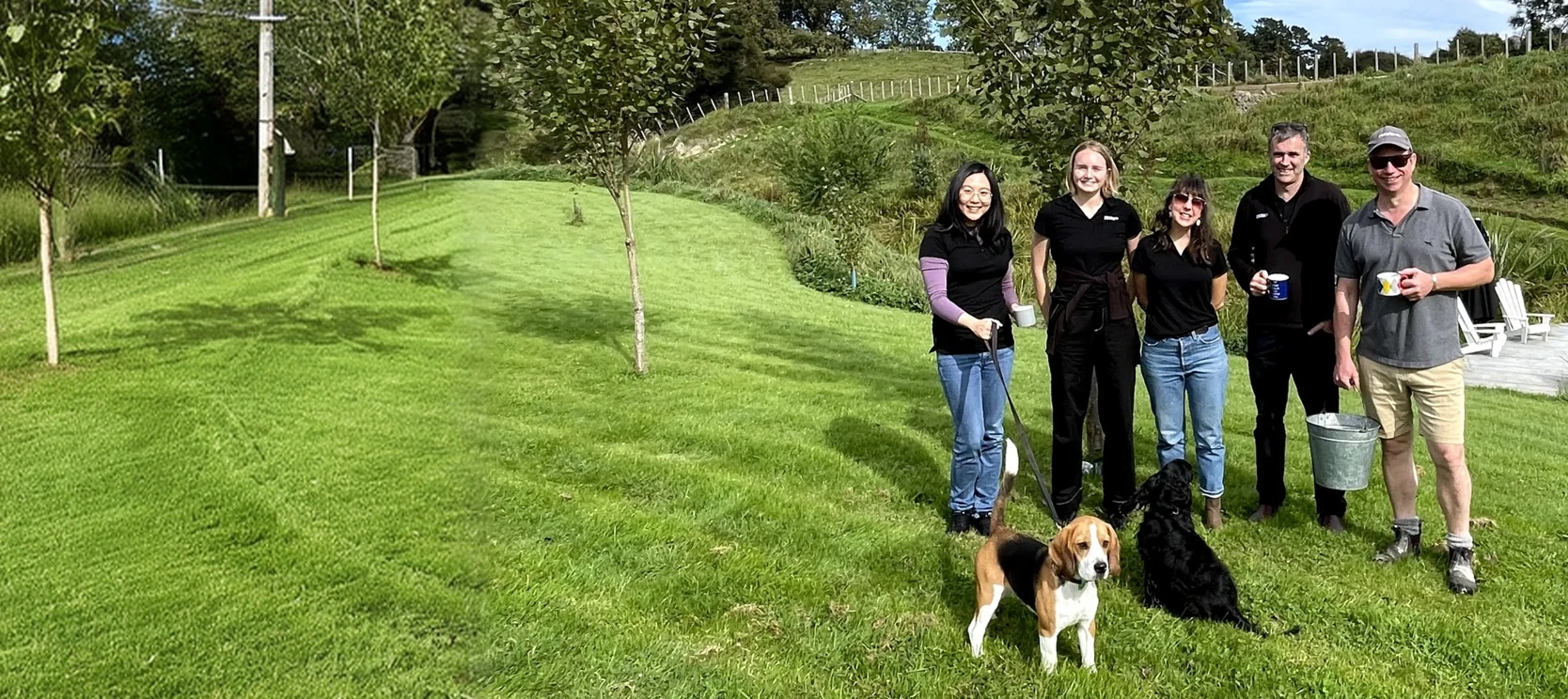
Farmers happier to help, they could see our progress.
The Outcome
75–80%
response rate on surveys
reaching farm workers our previous research had missed entirely.
80%
CSAT on mobile recording
the workflows farmers rely on most.
With conservative measurement, we also saw strong behavioural signals:
NPS scores increased season-on-season.
30% average increase in feature requests via in-product surveys, helping us maintain the backlog and build the roadmap with confidence.
Less ad-hoc, reactive problem-solving. Replaced with 3 weekly design jams creating a structured rhythm the whole team could rely on.
We could do more with less. Design coverage extended to workers and third-party users, roles earlier personas had missed entirely.
“
Sarah is laser focused on the customer experience, but she knows that won't be served unless the whole team functions well. She worked hard to improve collaboration within the Product Team, taking on extra work so development had what they needed.
Todd White · Head of Product, FarmIQ
“
Sarah uplifted how we did research at FarmIQ, and she made sure I was part of shaping it, not just delivering it. Working closely with her on our principles, I grew more confident making my own calls.
Holly Feary, Senior Product Designer, FarmIQ
What I Learned
1
Clarity has to come before autonomy
Once the problem, principles, and decision criteria were explicit, the team could move faster on their own, they weren't waiting on me to unblock things.
2
A design system only works if engineering owns it too
Co-ownership mattered more than how many components we had.
3
Roles and Jobs-to-Be-Done gave us more than generic personas ever did
Once we modelled users by role, context, and job, discovery became something we could act on, with confidence.