Why change was needed
FarmIQ had grown organically. Across web and mobile, the products felt inconsistent; designers solved the same problems twice; engineers rebuilt near‑identical components with different behaviours; and delivery slowed.
After a significant restructure, we had a newly re‑formed team with different backgrounds and working styles — but no shared operating model (mission, rituals, measures) to keep quality high while moving quickly.
Our customer understanding also needed to mature. The existing personas were too narrow and didn’t reflect roles, context, or device use. As a result, discovery inputs lacked the clarity needed for confident prioritisation. We had to improve how we worked, how we understood our farmers, and how we scaled consistency — then encode that into a design system co‑owned with engineering so teams could deliver faster with fewer surprises.

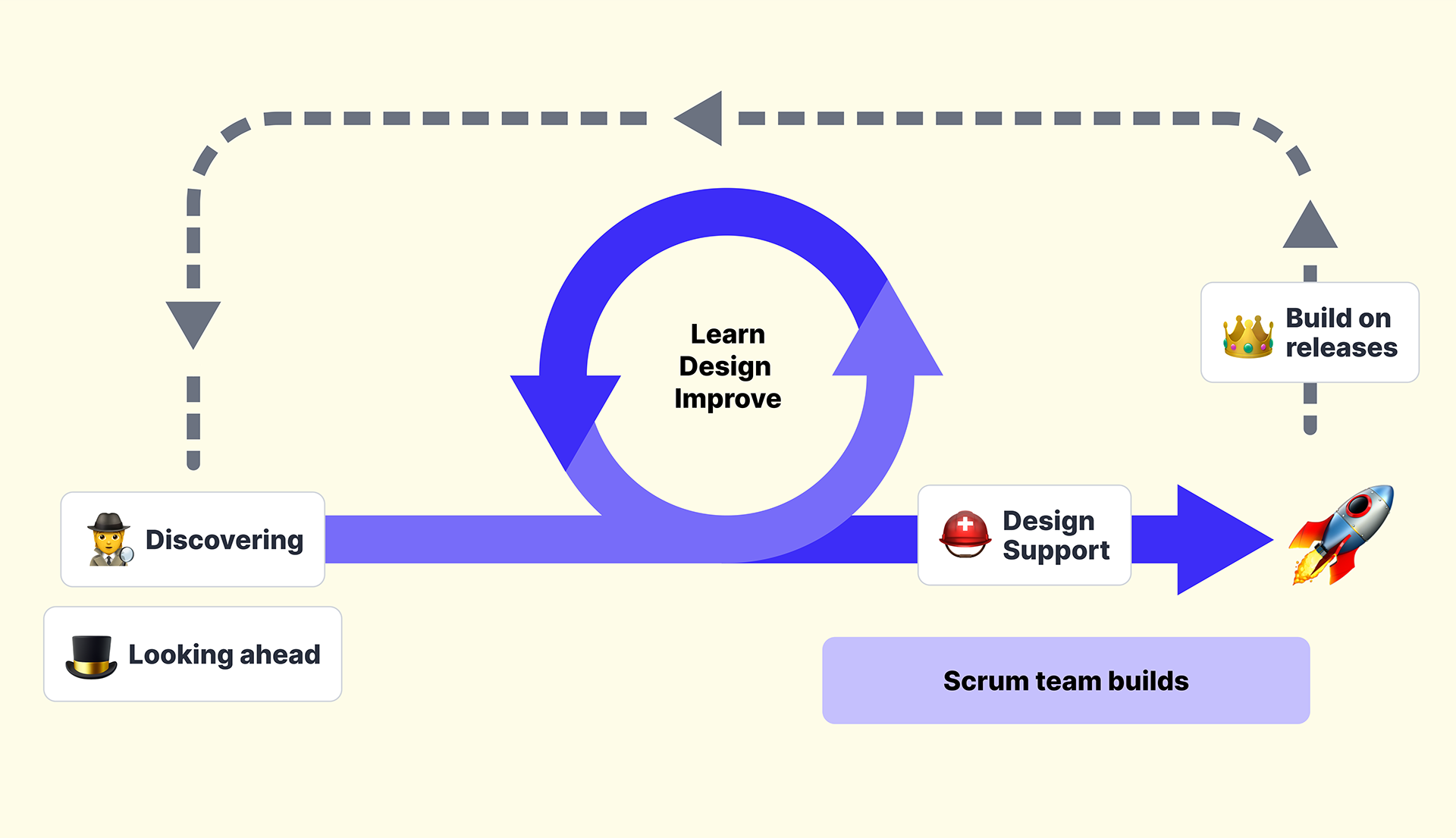
We reduced reactivity by strengthening our discovery rhythm, minimising design support, and creating a repeatable ‘build‑on‑releases’ loop that helped us learn and improve with every season.
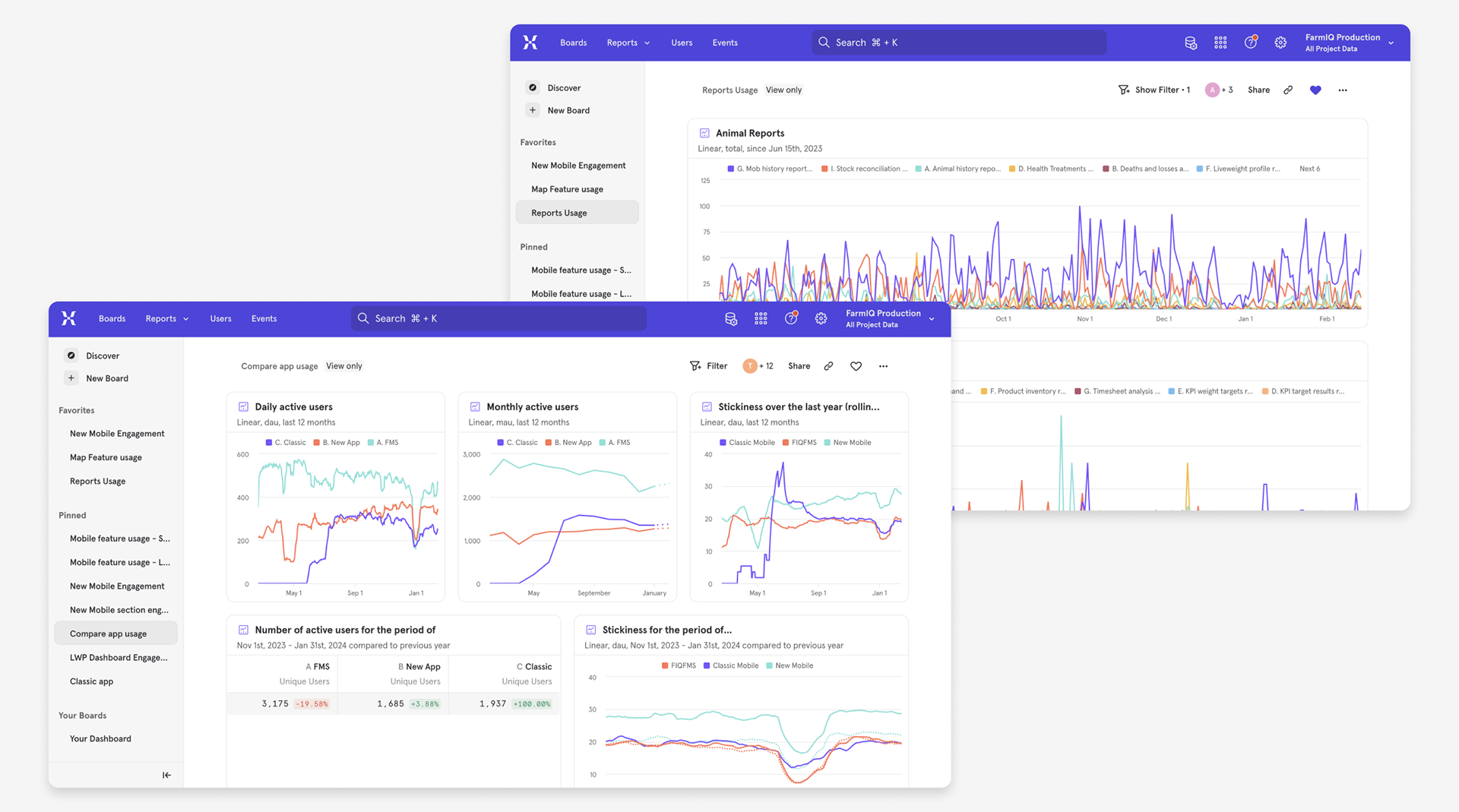
Really measuring our success and improving solutions with feedback, saw an increase in CSAT and NPS scores, season-on-season.
How I Led the Work
As Lead Product Designer, I guided a small, diverse team (two product designers and a graphic designer) through framing, facilitation, and iterative improvement. I partnered closely with Product Managers, Engineering Leads, Customer Success, and internal farming SMEs to keep decisions grounded in real on‑farm workflows. 
My leadership combined vision‑setting (principles, mission, decision criteria), enablement (coaching, templates, rituals), and cross‑functional alignment (shared cadences, a contribution model, joint reviews). 
The goal: make great outcomes repeatable and ensure web and mobile experiences feel like one consistent, easy-to-use product.​​​​​​​

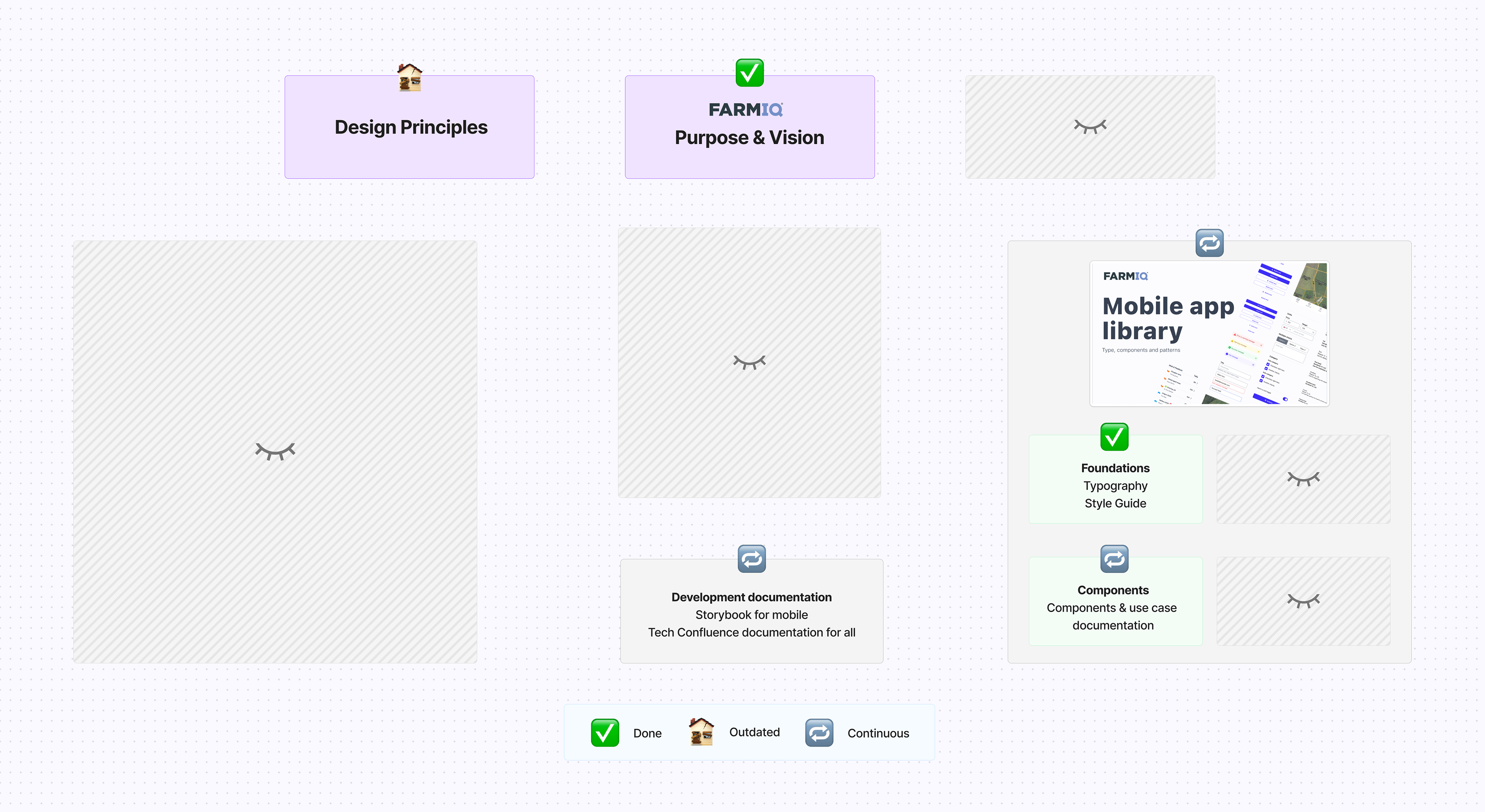
Depicts the state of the Design System when I joined FarmIQ.
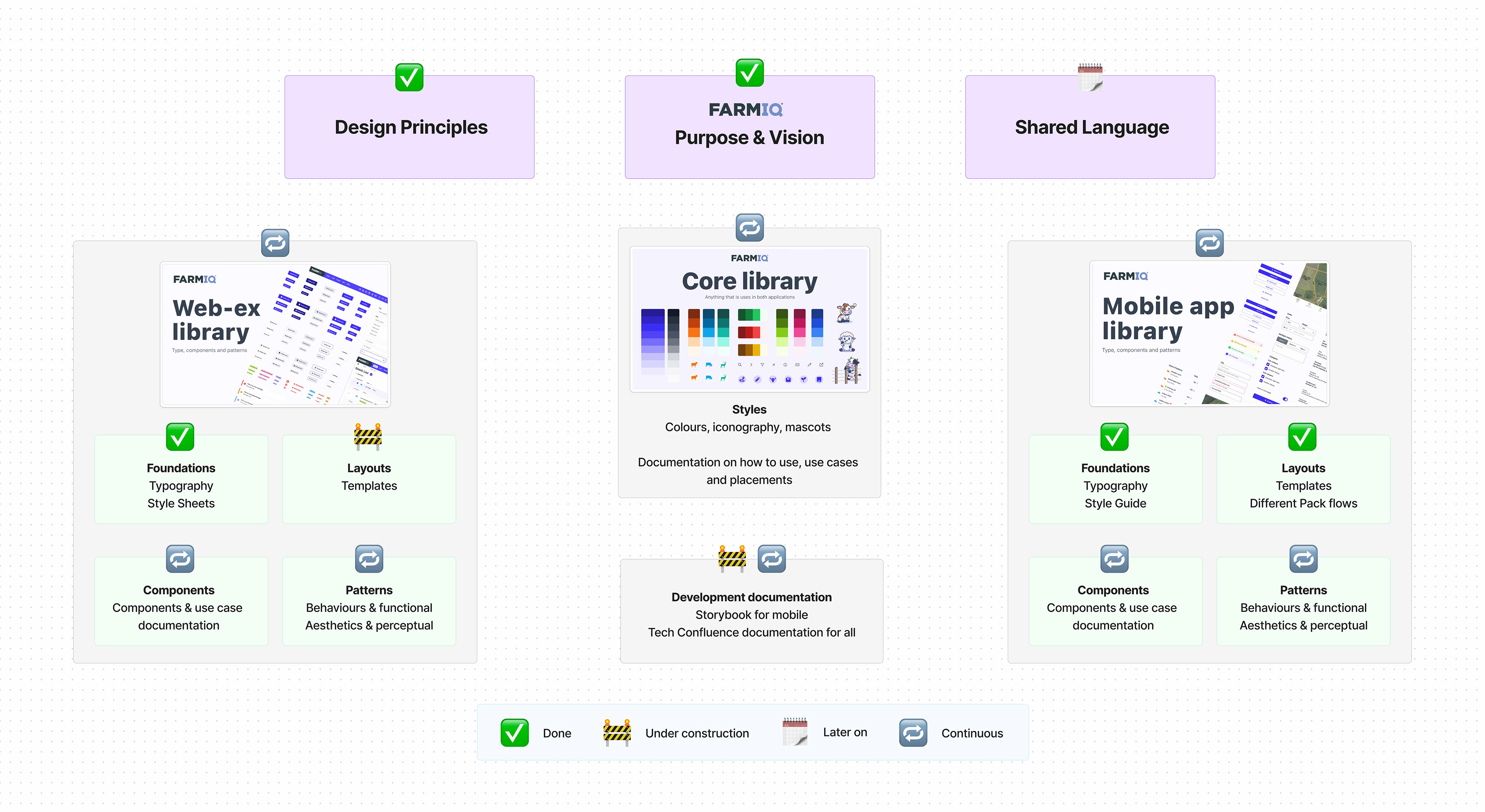
Design System state when I left FarmIQ.

How We Built the Foundations
1. Gave the team a clear north star (Charter + Principles)
We co‑created a Design Team Charter defining mission, roles, values, collaboration agreements, and measures. I translated the company's strategy into a concise design narrative and principles (clarity, consistency, resilience) that resolved debates without looping around the same discussions. The Team Charter and Design Principles became the lens for design reviews, experience vs build trade‑offs, and roadmap conversations.
2) Modernised customer understanding (Farmer Roles + JTBD)
I led a refresh of our customer understanding through research. Every interview began with consistent “farmer introduction” questions, and each session produced a farmer‑on‑a‑page summary. With SMEs, we co‑created role definitions across farm owners, farm managers, stock managers, workers, and third‑party users, and paired them with Jobs‑to‑Be‑Done to focus on outcomes that matter (e.g., record fast in the paddock, make confident decisions on-the-go). We also acknowledged technology‑adoption differences to understand when mobile‑first simplicity was non‑negotiable.
3) Closed the loop with in‑product feedback
To learn quickly from all roles (including hard‑to‑reach workers), I introduced in‑product surveys across web and mobile. We saw 75–80% completion on targeted pulses, and ~80% CSAT for mobile recording flows; insights fed straight back into iteration and prioritisation. This qualitative insight, alongside our quantitative analytics, helped us measure the success of released solutions and prioritise building on them when needed.
4) Scaled consistency with a multi‑platform Design System
I led the evolution from fragmented design libraries to a governed Design System co‑owned with engineering. We audited components and behaviours; defined system architecture (foundations → components → patterns); aligned states and accessibility rules; and introduced a contribution model (propose → review → approve → document). Seasonal “system reviews” prevented drift and kept quality high.
5) Made delivery faster and more predictable
I introduced lightweight cadences (short weekly check‑ins, structured design reviews) and paired designers with PMs/engineers to own flows end‑to‑end while I held cross‑flow cohesion. Decisions and patterns were documented so future teams could move quickly without losing guardrails.
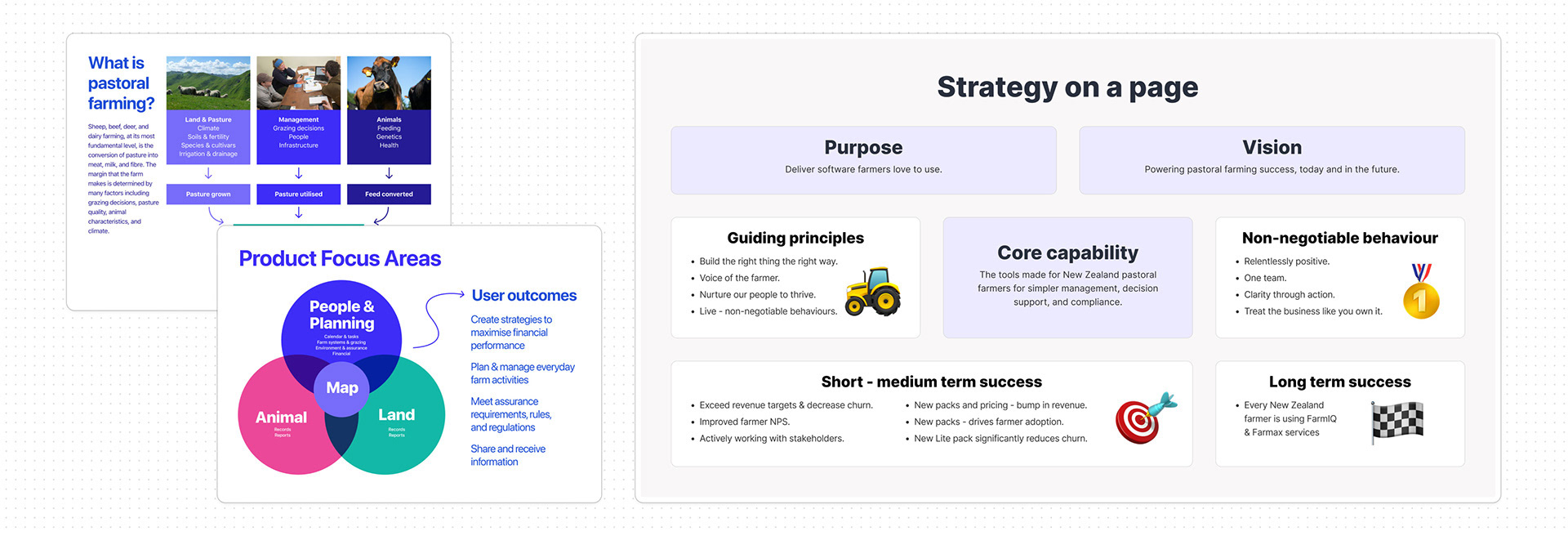
Reviewing FarmIQ's purpose and vision, which led us to create our Design Team's Mission.

Design Principles became our decision‑making shortcuts — helping the team design, review, and validate faster with shared clarity.
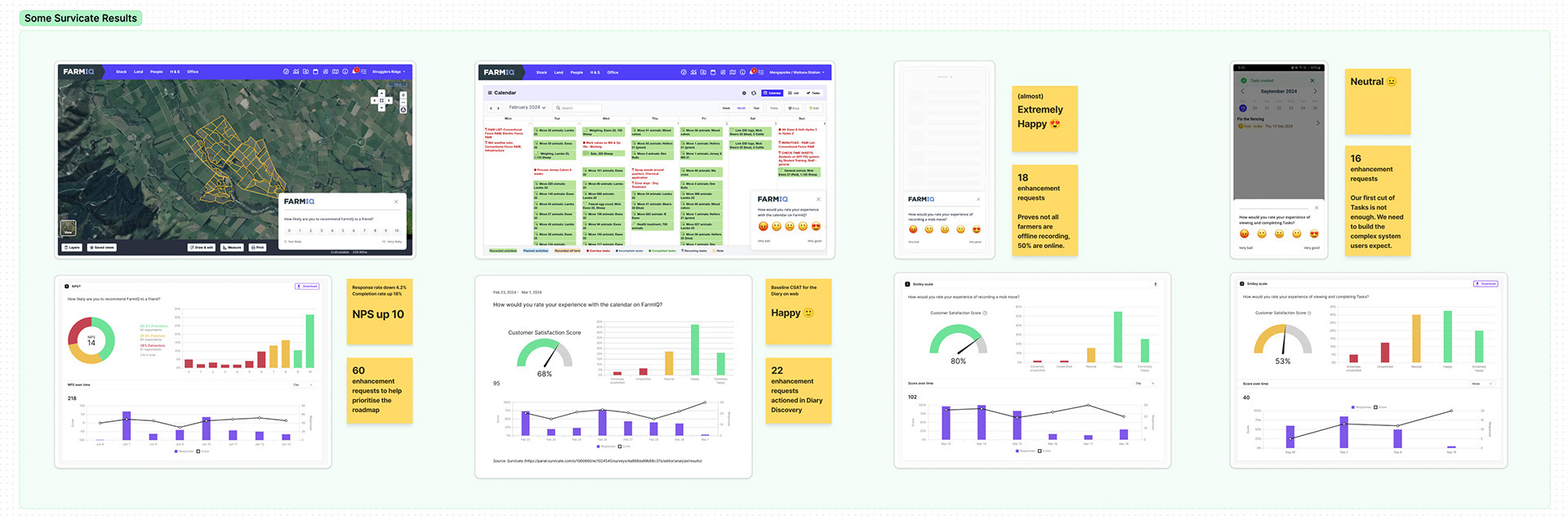
In-product feedback allowed us to reach workers and managers in context and enabled us to validate and iterate quickly.
The Operating System We Built
This wasn’t one feature. It was an integrated operating system for how we design and deliver:
Team Operating System: Charter, values, collaboration agreements, review cadences, and principles that guide trade‑offs.
Customer Understanding: Farmer Building Blocks (roles + JTBD + context + adoption) used in discovery, prioritisation, and design decisions.
Design System: A multi‑platform foundation — foundations (tokens, type, colour, spacing), components (with documented states/accessibility), and patterns (e.g. recording, summaries, escalation) with a governance loop owned by design + engineering.
Feedback Loop: Targeted, in‑product pulses that turn releases into learning — and learning into the next set of improvements.
Information flows from roles & jobs → principles & patterns → shipped experiences, then back via feedback to shape the next iteration. 
The result: fewer ambiguous choices, fewer “one‑off” components, faster agreement, and a consistent product across web and mobile.

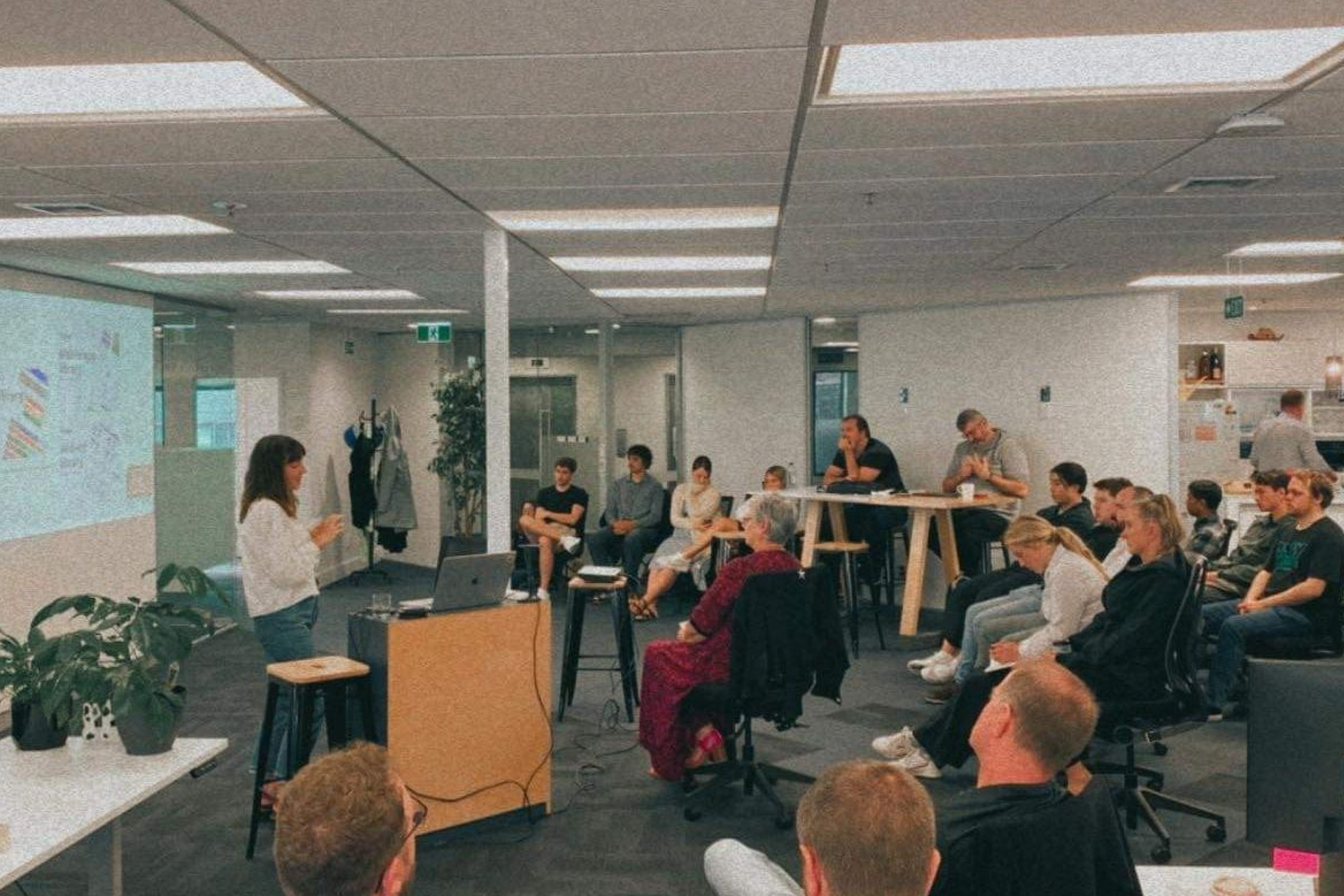
Education moment: Our Design System & how to use it
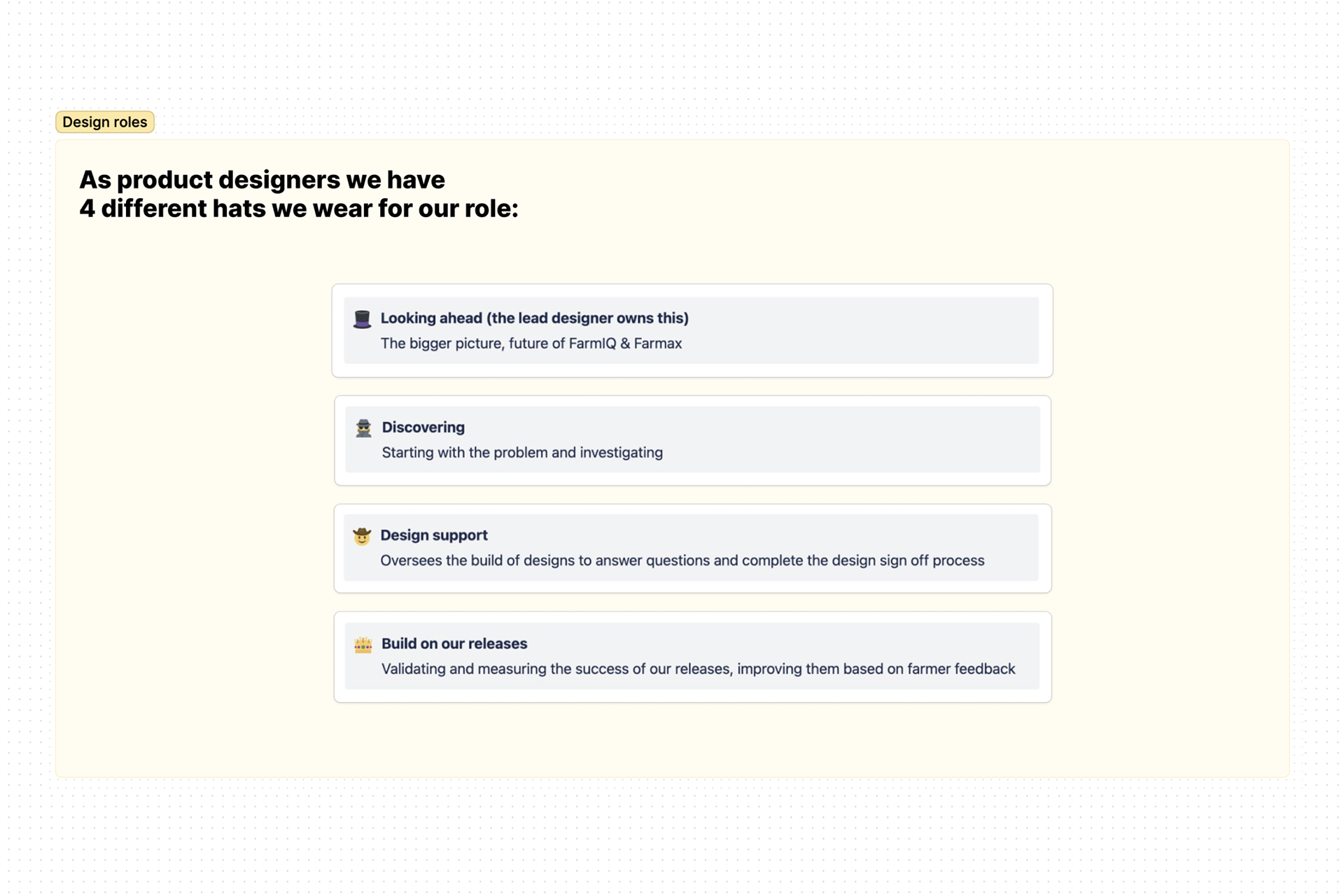
What the Design Team needs from the rest of Product
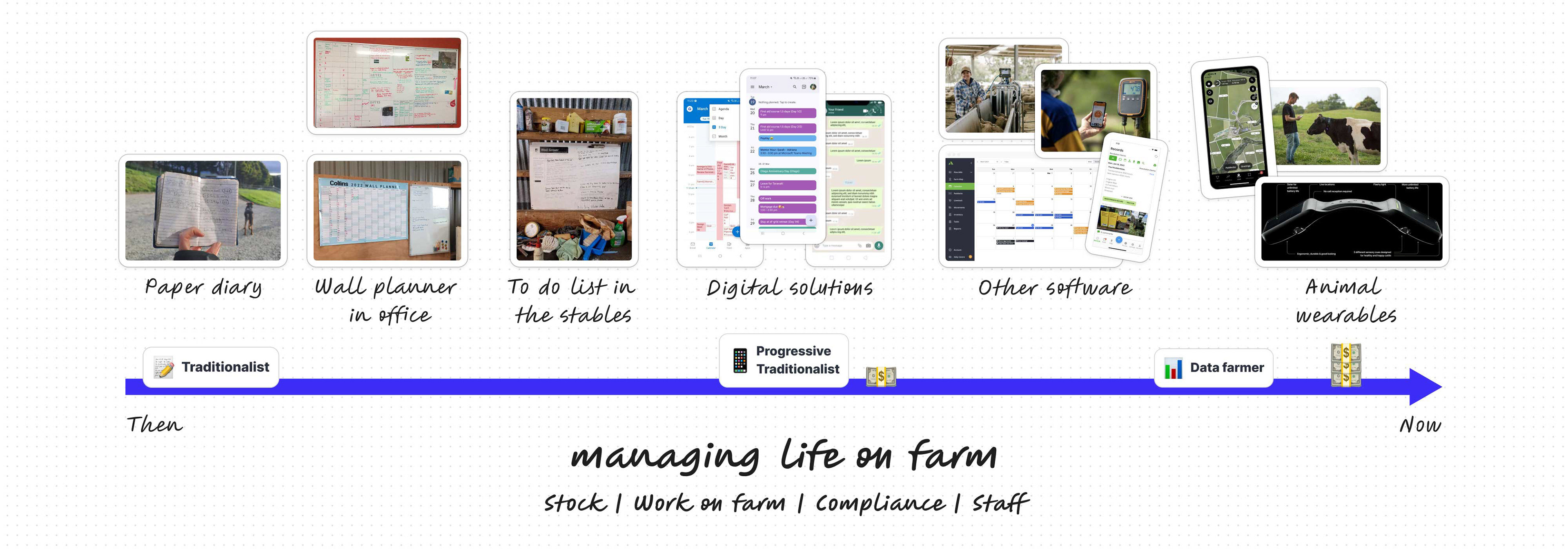
What Changed
Clarity & alignment: Teams made faster, better decisions because principles and roles/JTBD clarified what “good” looked like.
Consistency at scale: The Design System reduced design drift and conflicting behaviours across surfaces, improving user trust and internal confidence.
Velocity & predictability: Designers reused patterns instead of starting from scratch; engineers had clearer rules and fewer back‑and‑forth clarifications; hand‑offs were faster.
Better coverage of real users: The refreshed customer model ensured we designed for workers and third parties, not just owners/managers — critical for adoption and retention.
Feedback where it matters: In‑product surveys reached hard‑to‑contact roles with 75–80% completion on targeted pulses and delivered ~80% CSAT for mobile recording flows, fuelling faster iteration.
Resilience through change: The operating model (charter, cadences, contribution loop) made delivery repeatable despite org shifts, and created shared ownership with engineering.
Qualitatively, PMs and engineering leads reported fewer surprises, clearer trade‑offs, and more predictable releases. Designers reported greater autonomy. FarmIQ could point to a single source of truth, our roles and JTBD when framing new discovery.

Modernising customer understanding to guide discovery and prioritisation, starting with our farmers' core job (JTBD), managing life on the farm .
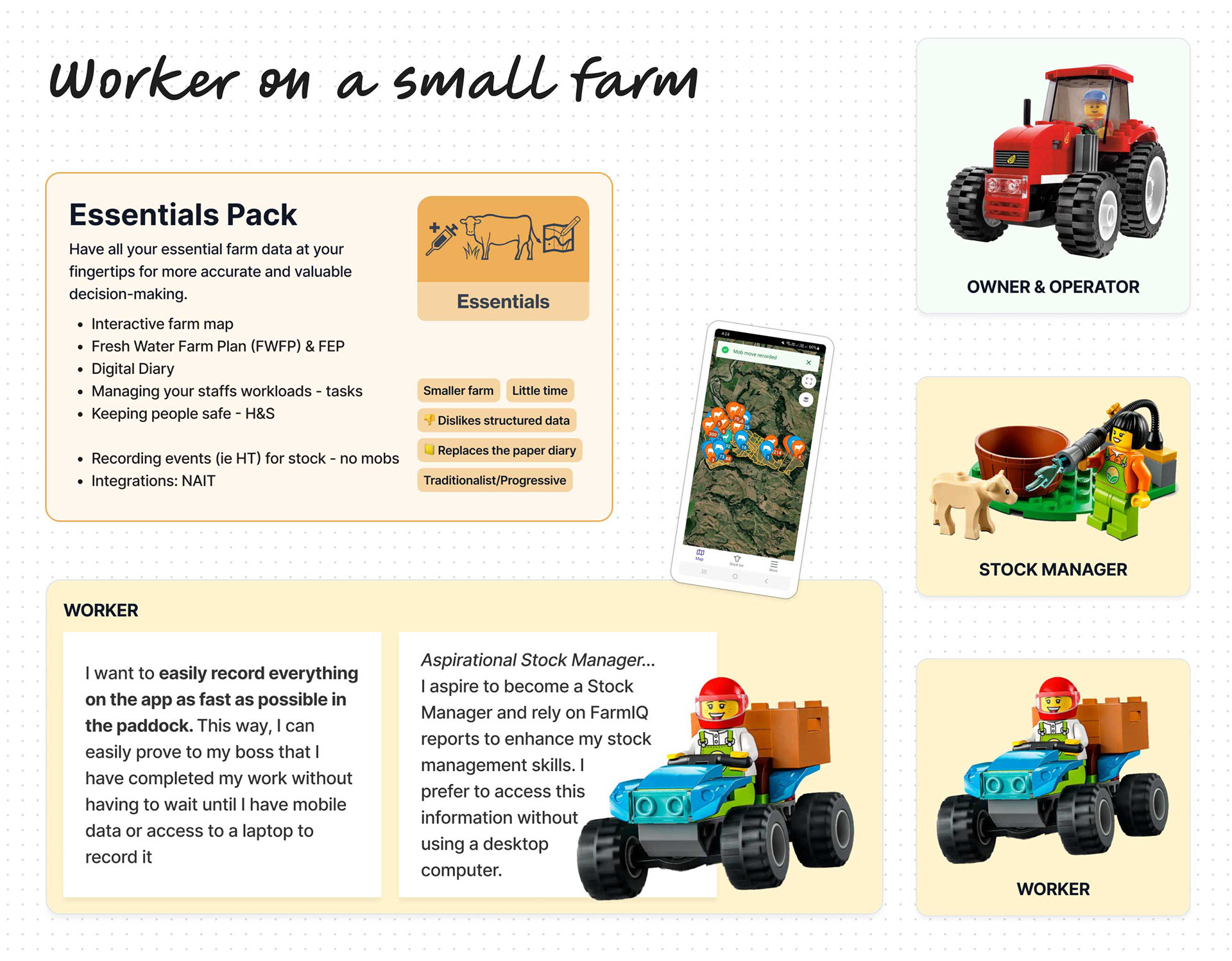
An example of our Worker on a small farm with a budget.
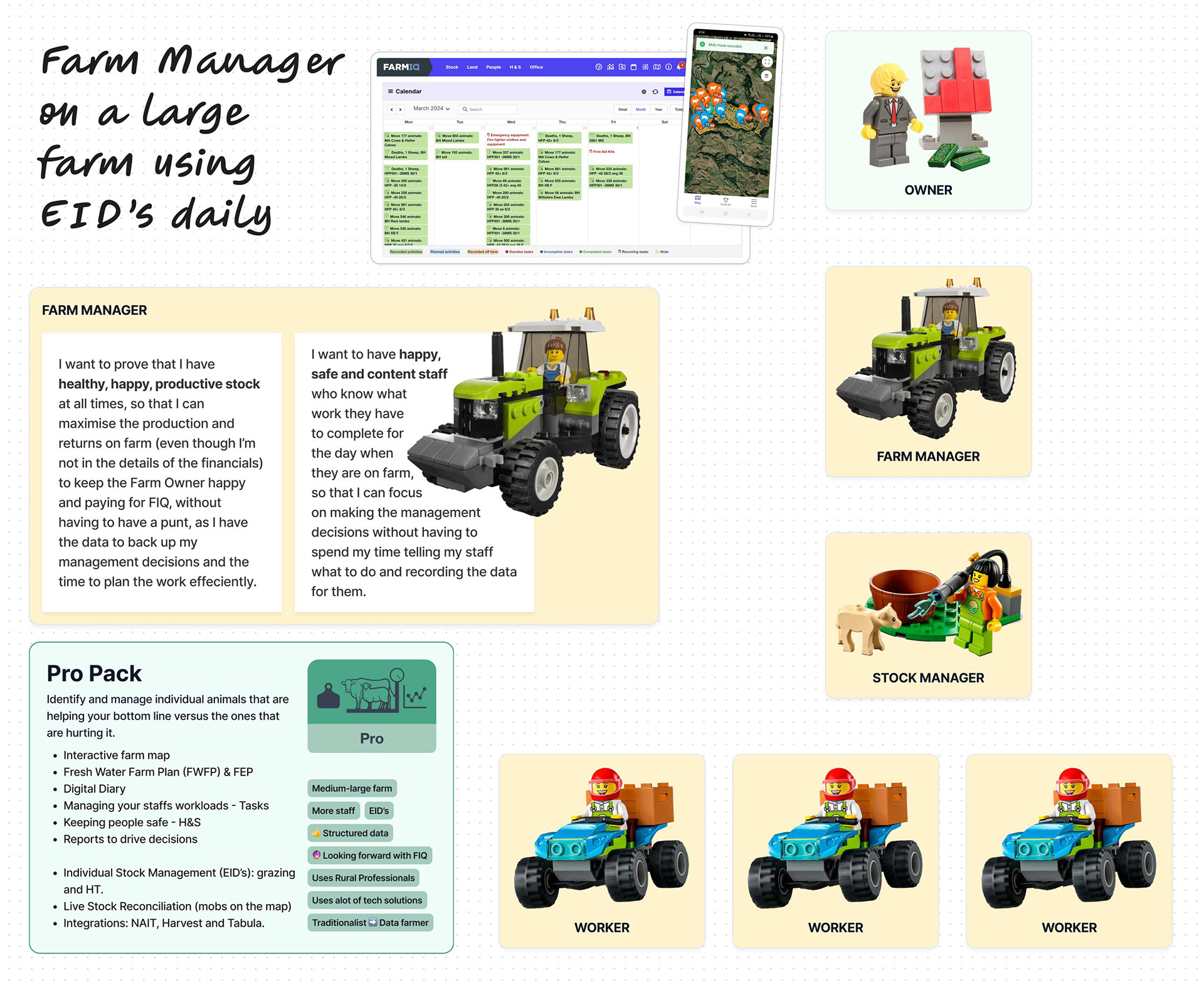
An example of our Farm Manager on a large farm with lots of staff.
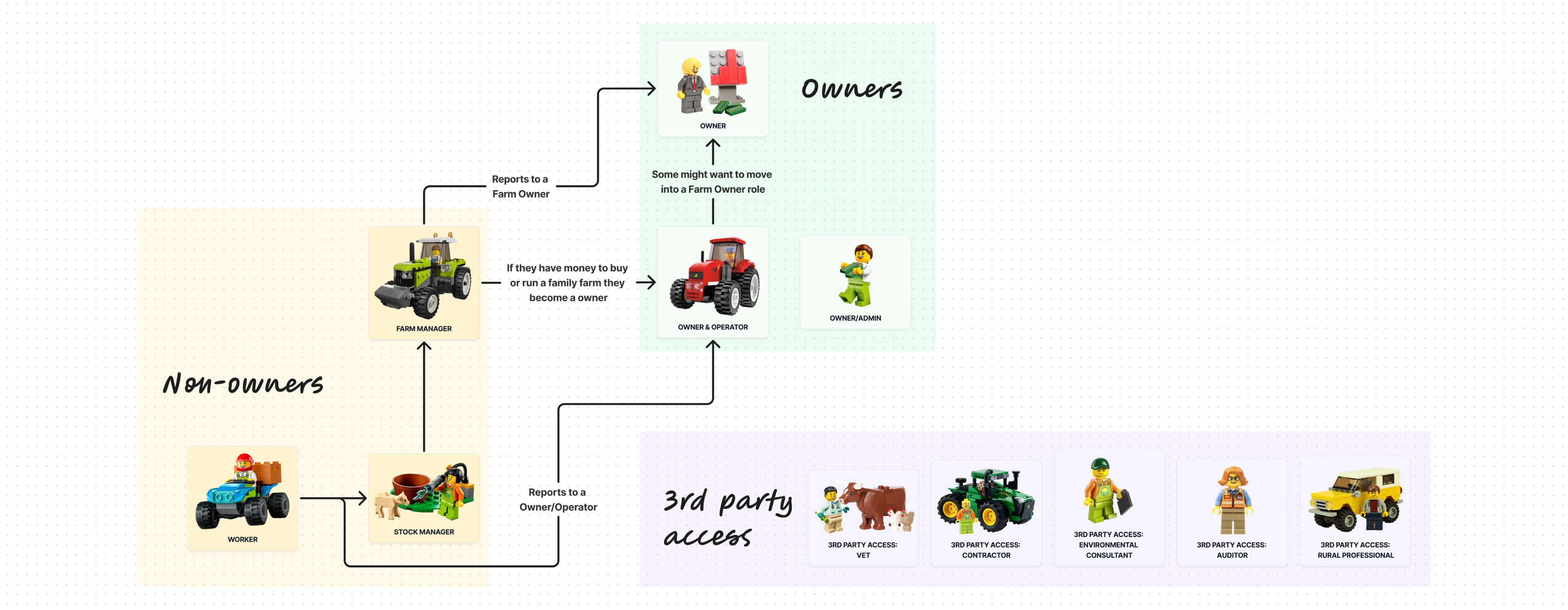
Role Relationships
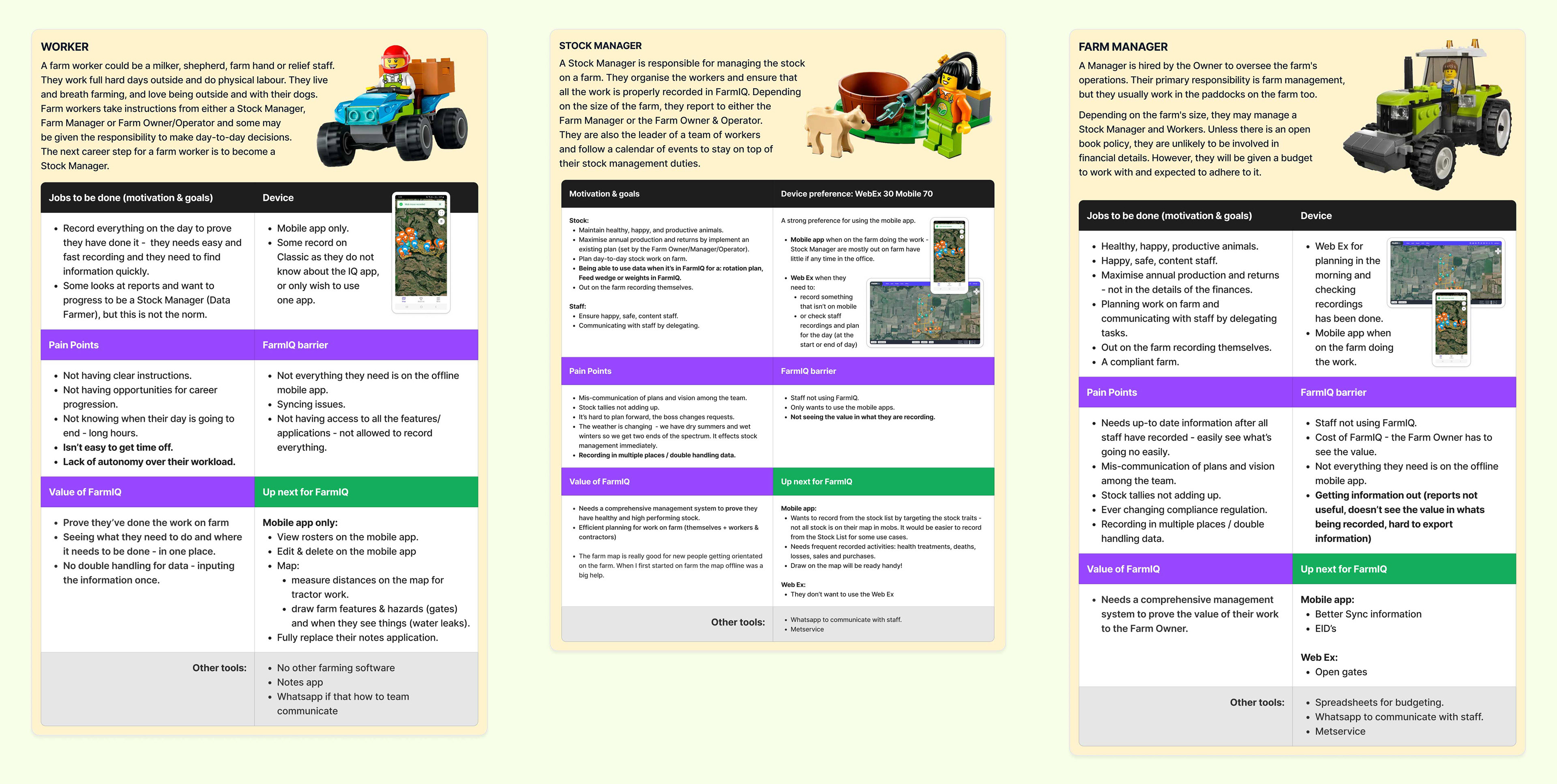
Example of our roles on a page
What I Learned About Leading Design
Clarity precedes autonomy: Teams move fastest when the problem, principles, and decision criteria are explicit.
Design systems are social systems: Co‑ownership with engineering matters more than component count.
Roles and JTBD beat generic personas: When you model users by role, context, and job, discovery becomes actionable and prioritisation gets easier.
Meet users where they are: In‑product, targeted pulses outperformed generic surveys and surfaced insights from workers we rarely heard from.
Make it repeatable: Cadences, contribution models, and living docs prevent the slide back into one‑offs and opinions.

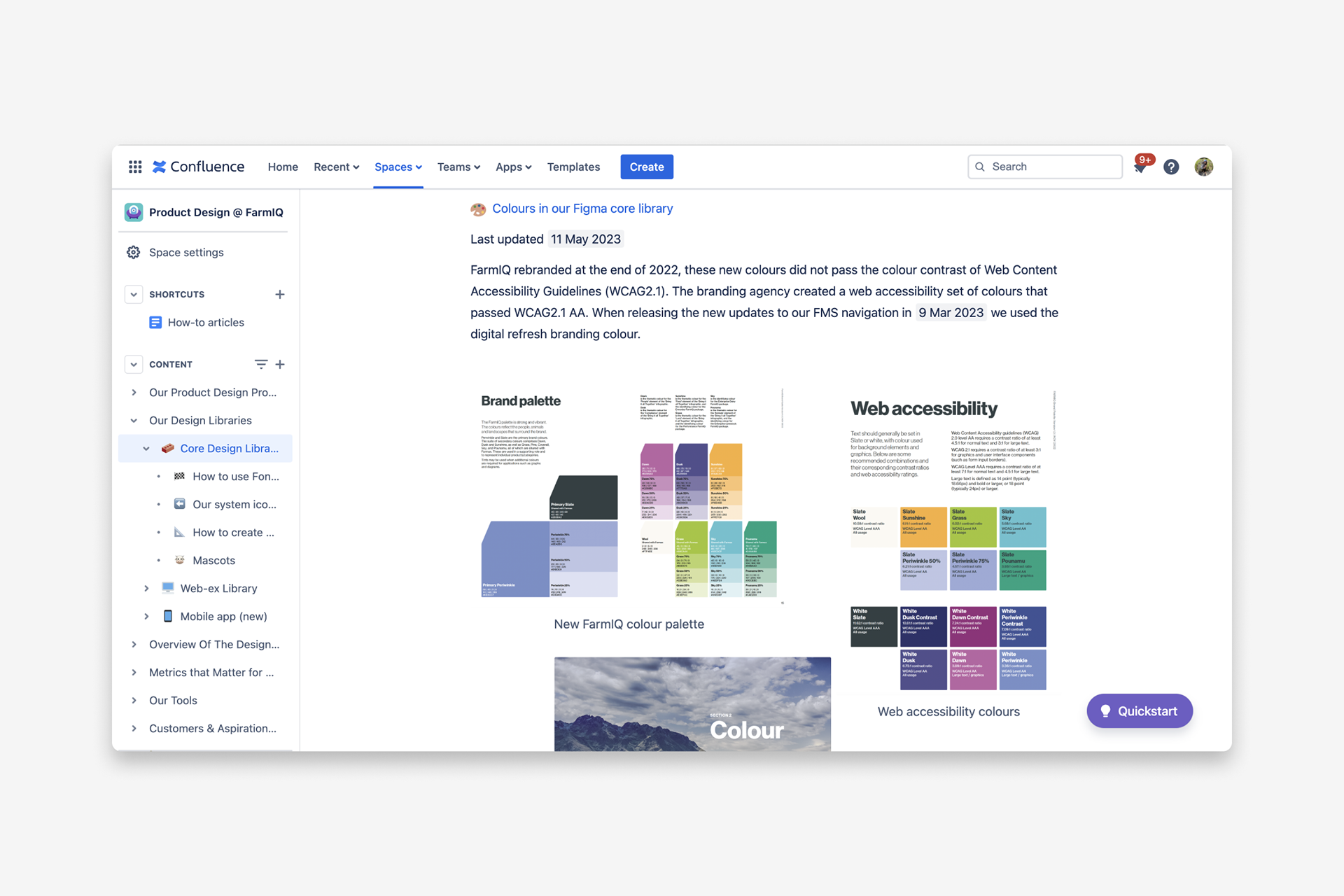
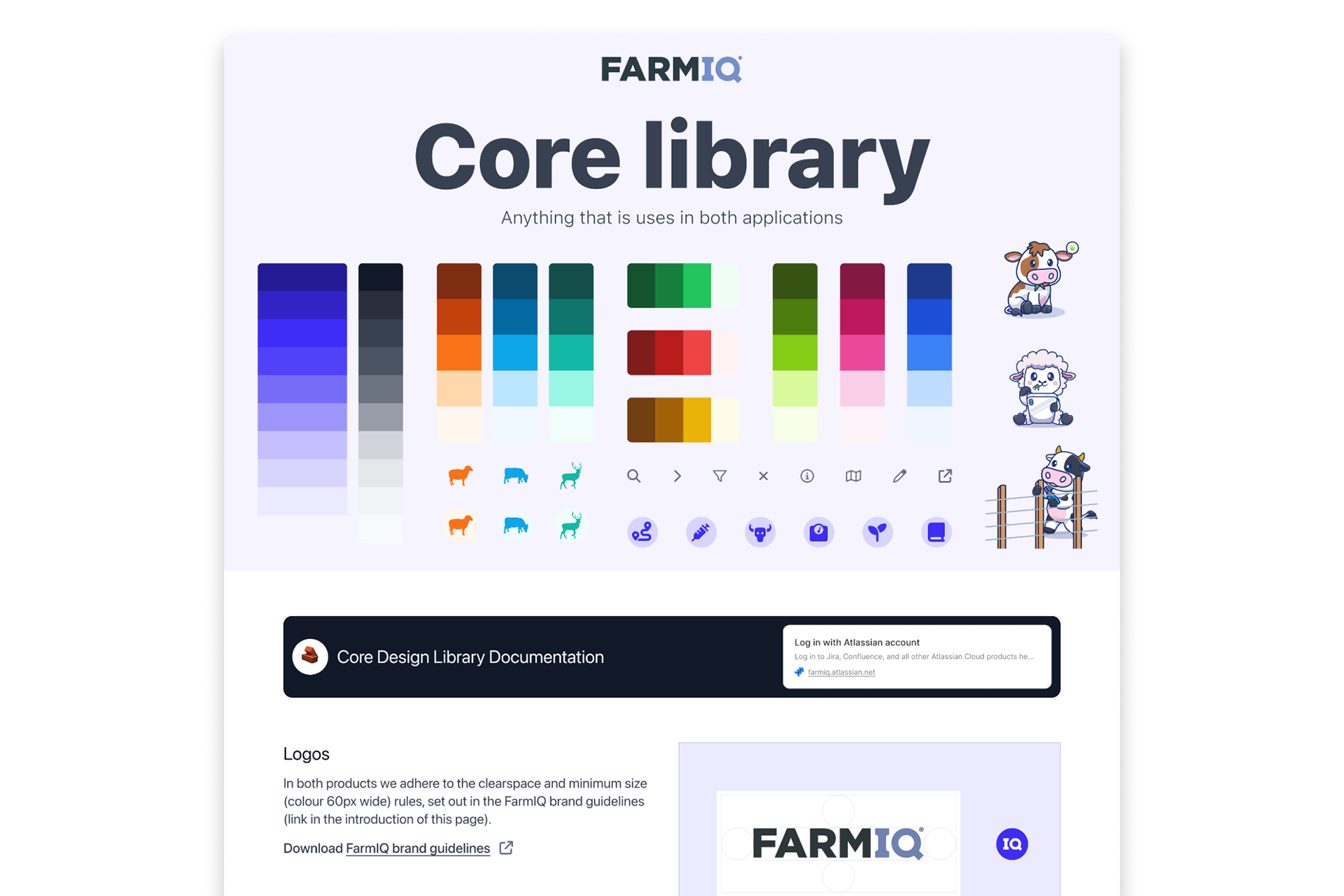
Our Core Library: foundations that standardise colour, iconography, and shared assets, creating the building blocks for a cohesive, scalable design system.
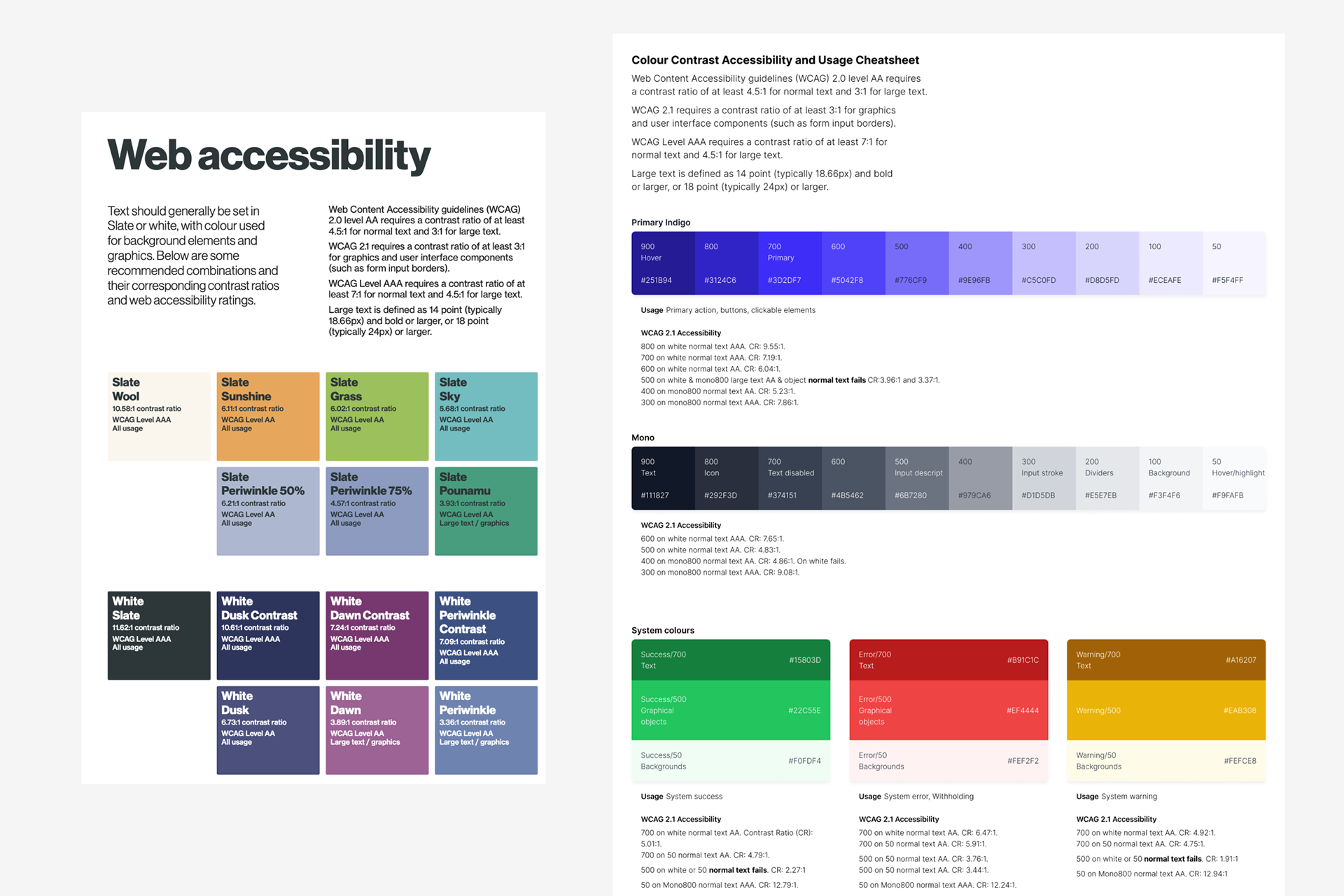
Accessibility‑driven colour tokens that standardise contrast, usage, and decision‑making across the product—lifting consistency and ensuring WCAG compliance at scale.​​​​​​​

Core library documentation that unifies design, product, and marketing through shared standards and accessible foundations.
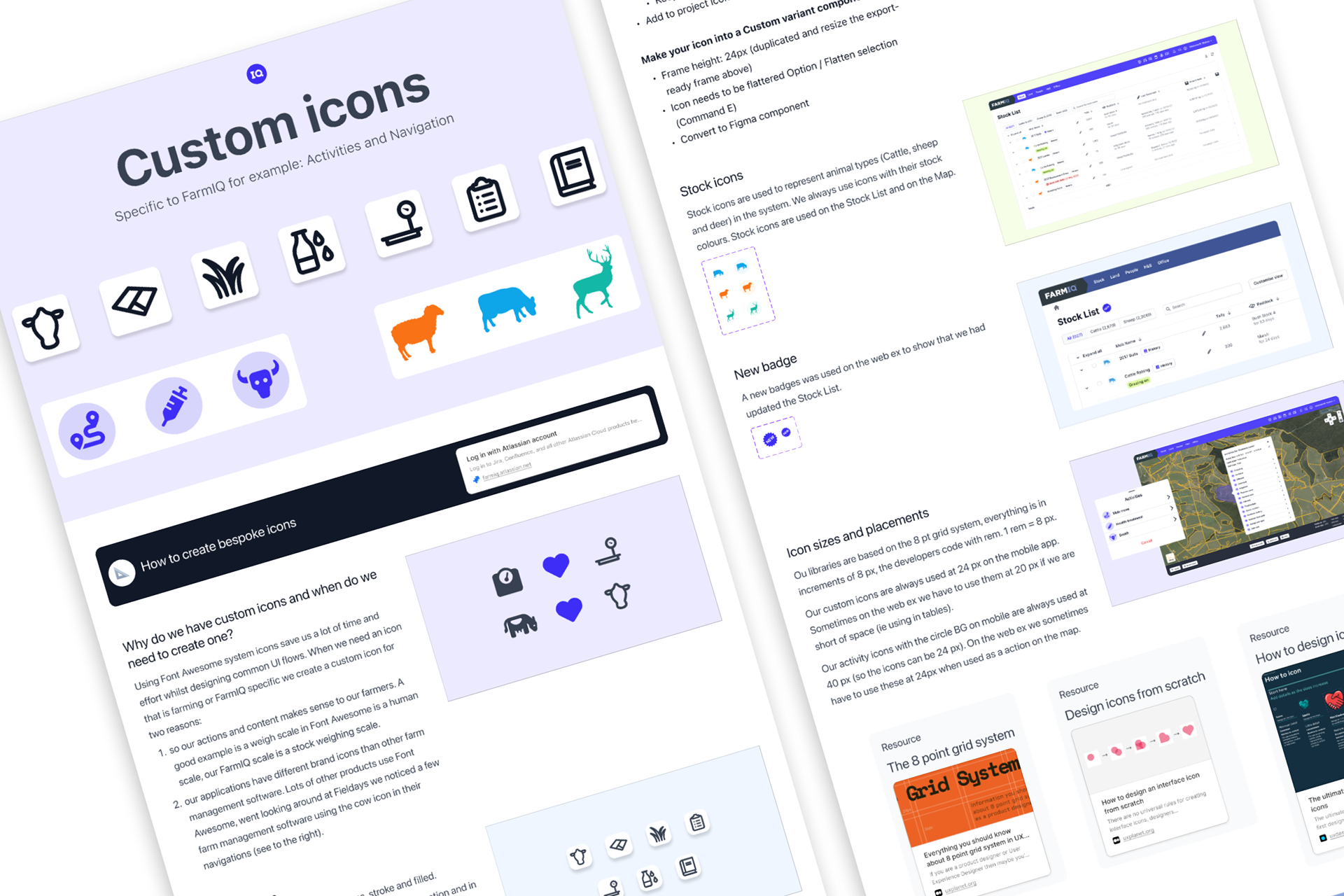
Iconography rules and guidance that help designers apply a cohesive, accessible, and scalable visual system.
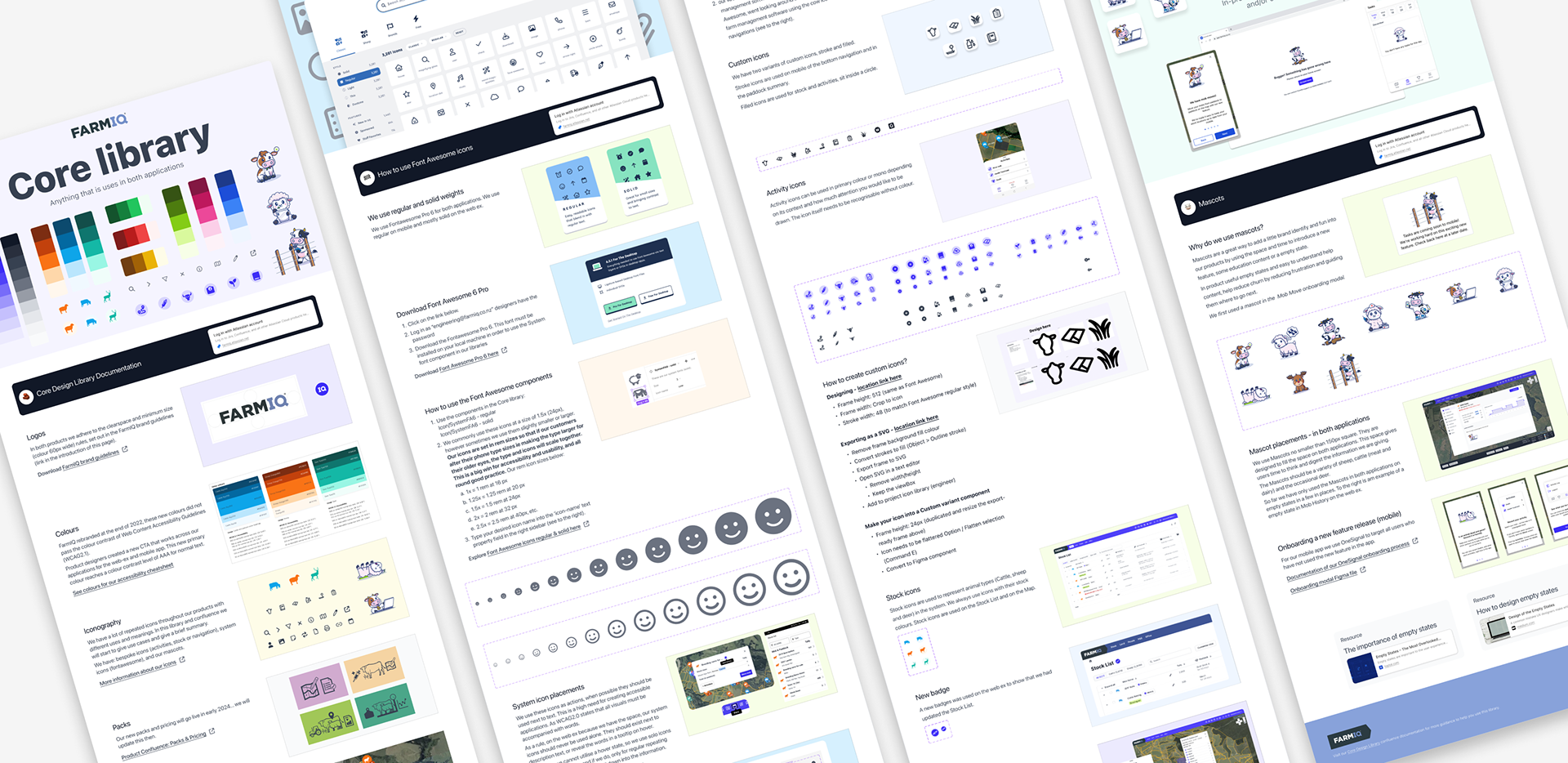
The full Core Library
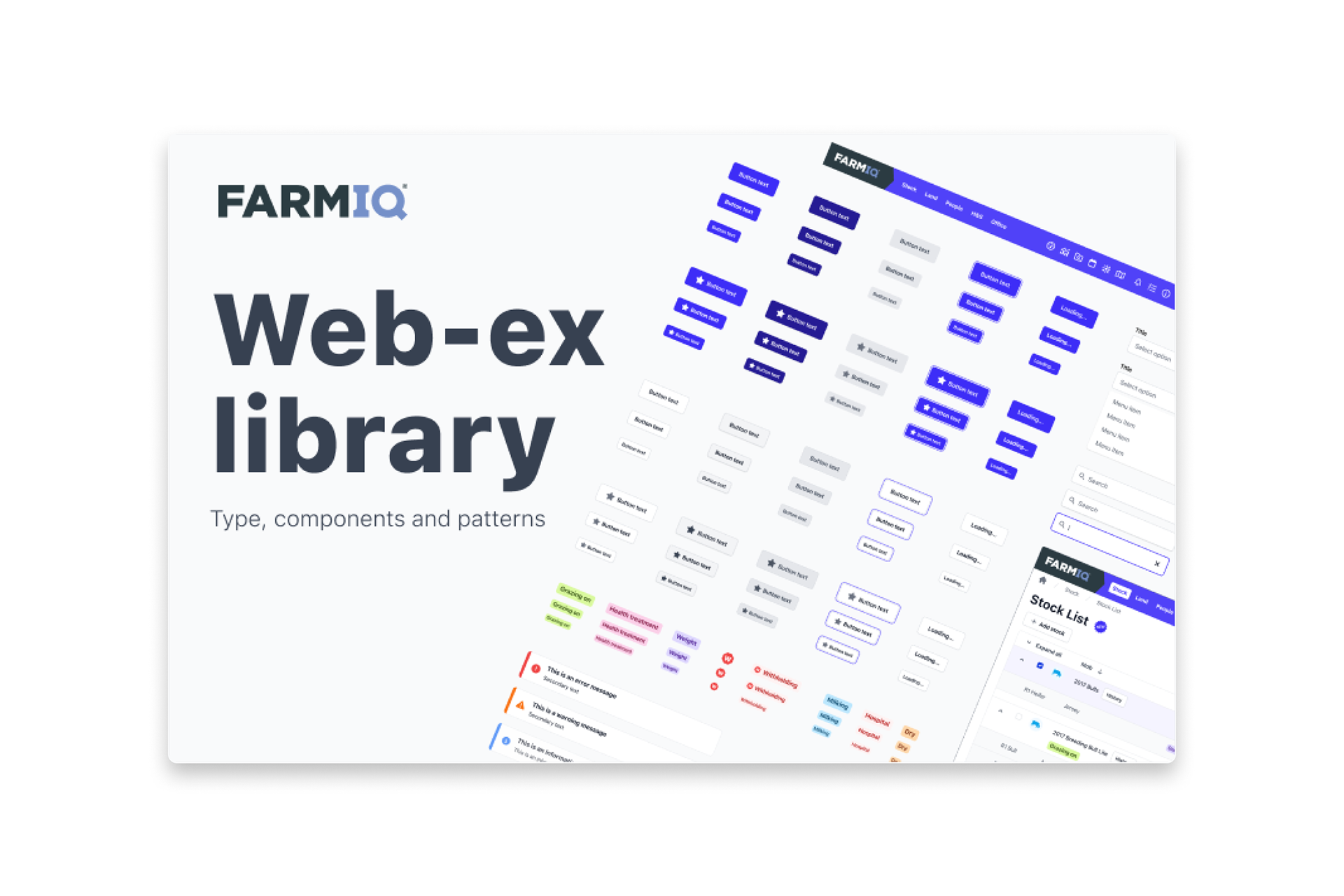
Our Web Experience library
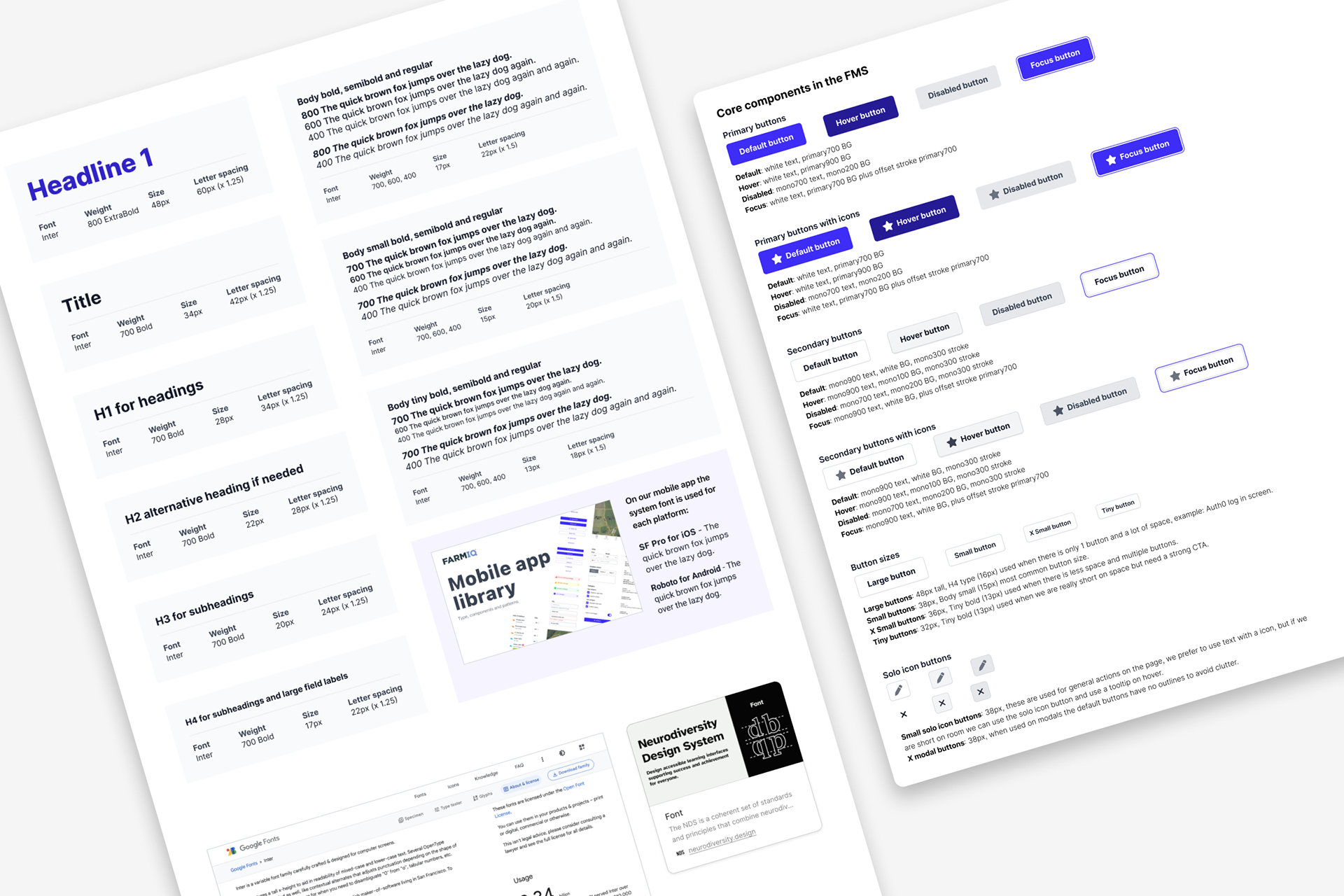
Web component set with states, variants, and usage guidance to reduce ambiguity and rework.
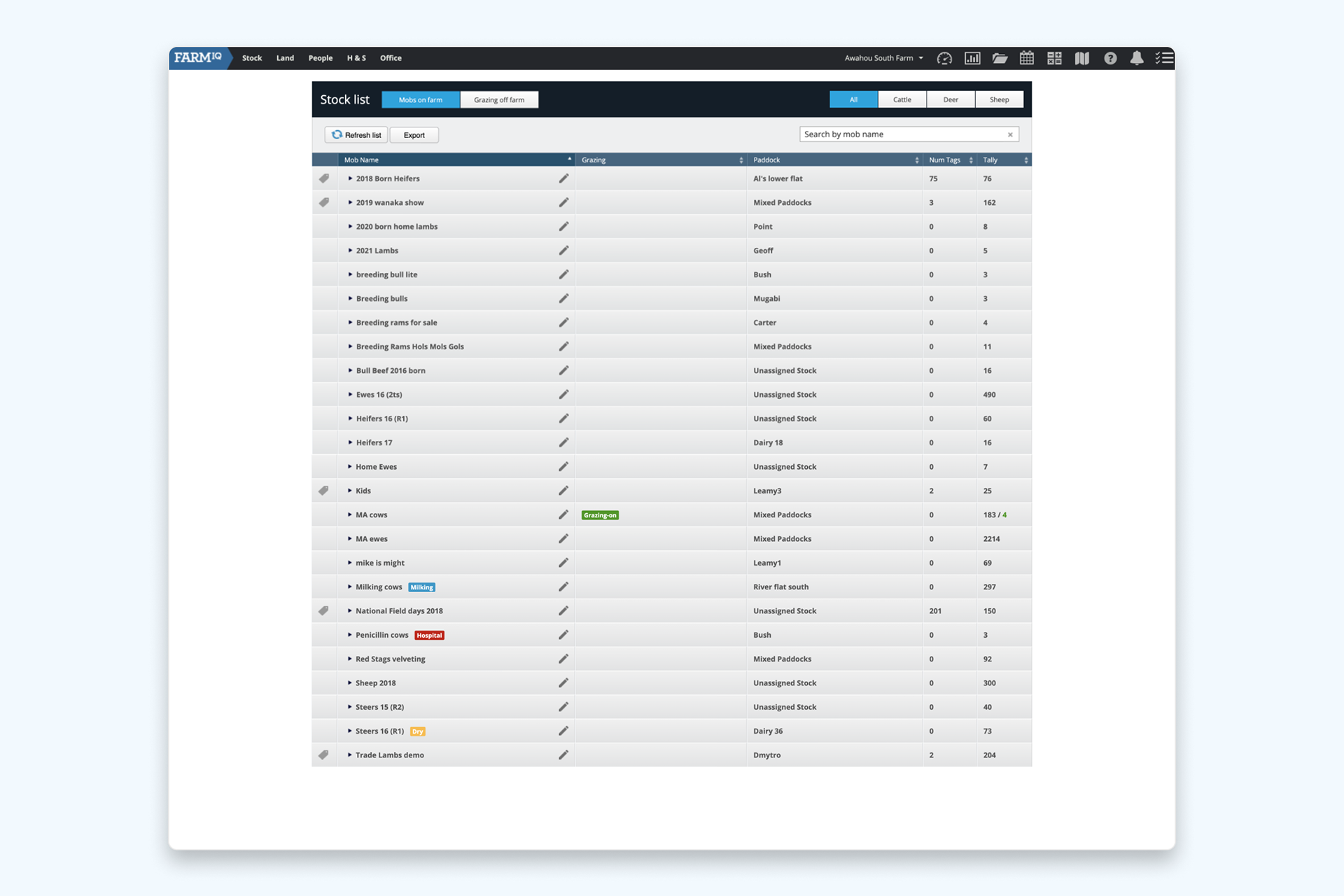
Web application before aligning with our updated brand
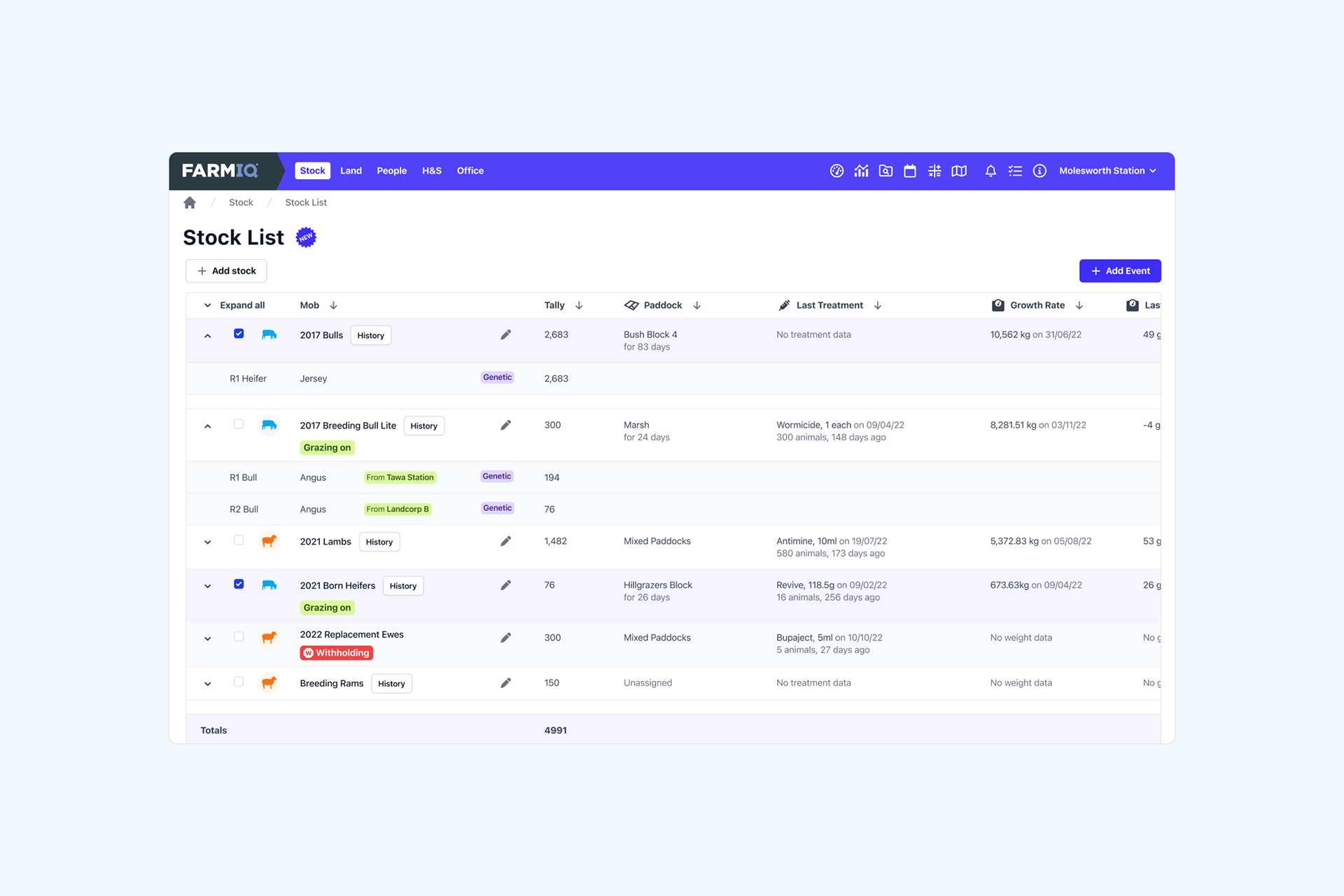
Web application after we have aligned with our updated FarmIQ & Farmax brand
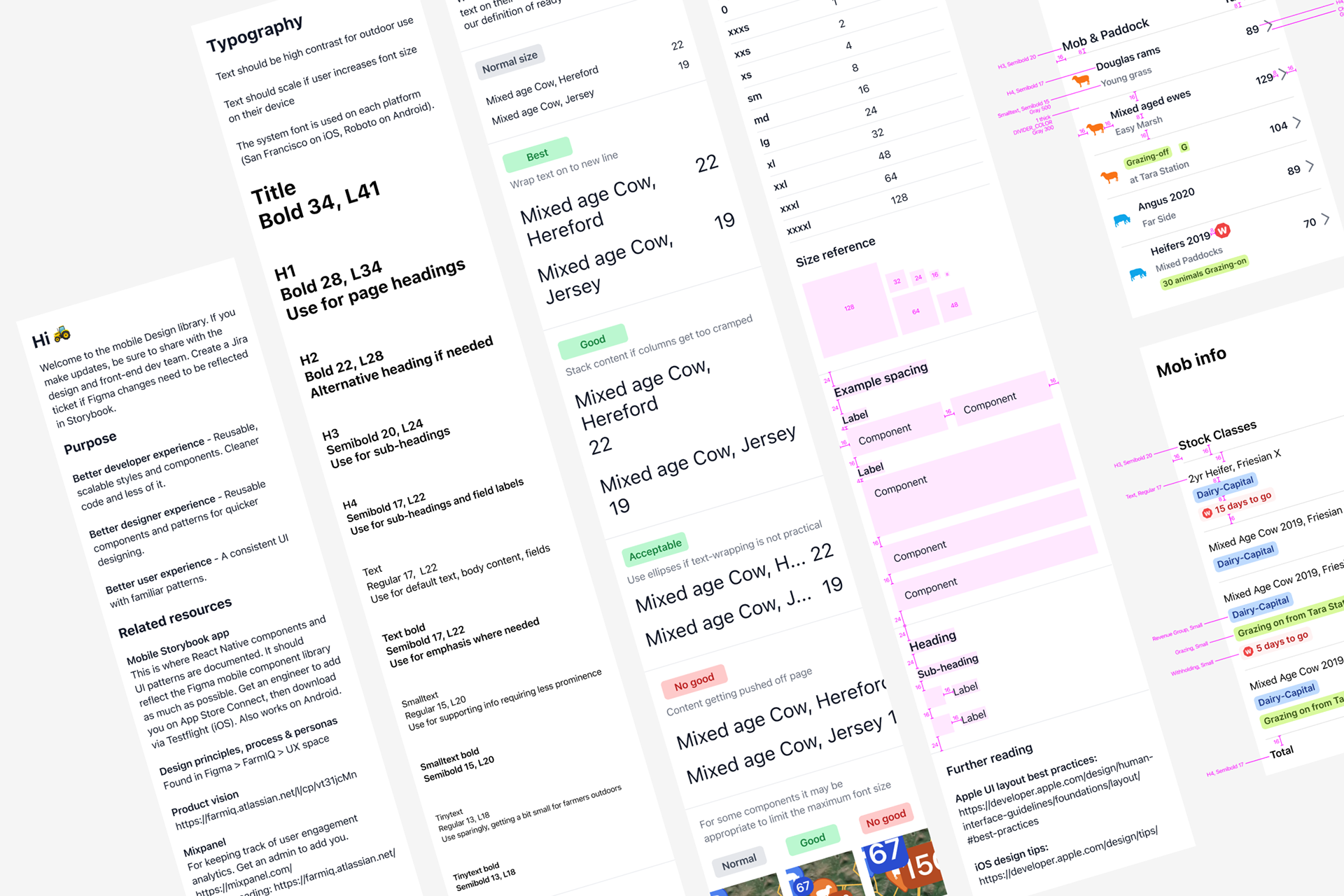
Detailed mobile typography and component specifications that standardise how designers apply hierarchy, spacing, and interaction patterns—improving consistency and reducing ambiguity across screens.
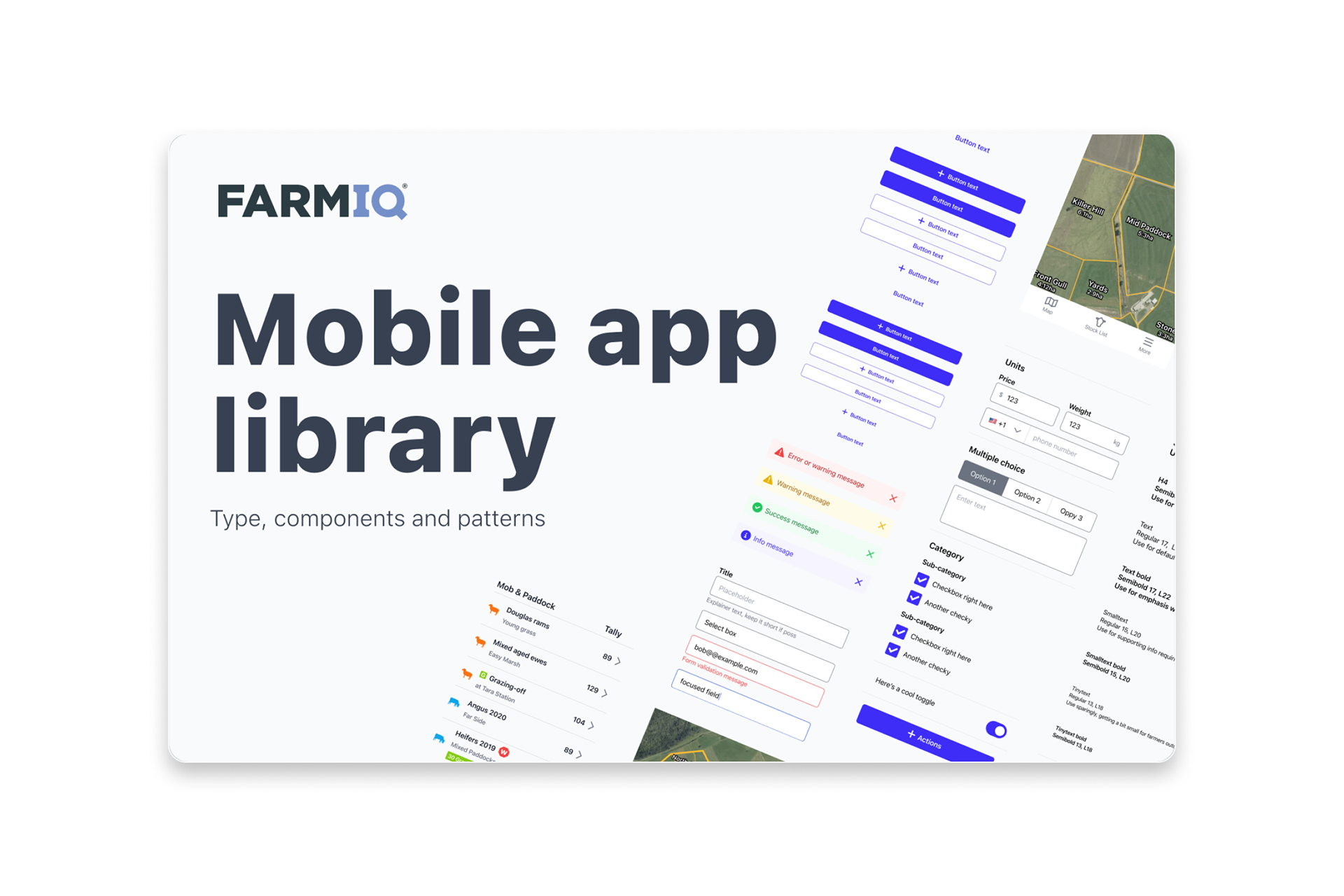
Our mobile app component library—platform‑ready patterns aligned to tokens, ensuring cohesive, scalable, and high‑quality mobile experiences across the FarmIQ product suite.

How This Set the Stage
With the Design Team operating system and Design System in place, we accelerated multi‑team initiatives without sacrificing consistency or velocity. The same foundations underpinned Diary (farm‑wide summaries for in‑field decisions) and Tasks (location‑aware delegation). ​​​​​​​
Work completed whilst at FarmIQ
Back to Top